Sunday, December 13, 2015

Fw: driving innovation: part-1


From: Peter Diamandis <peter@diamandis.com>
Sent: Sunday, December 13, 2015 10:15 AM
To: STeve
Reply To: peter@diamandis.com
Subject: driving innovation: part-1

Where do you get your most innovative ideas?

How do you increase the rate of innovation in your company?

It's probably the most important question a CEO or entrepreneur can ask.

Today's blog (part 1 of 2) outlines some of the most powerful ideas I've learned for stimulating solutions to your problems.

Here are three strategies to increase the rate of novel idea generation in your company.

[ Click to Tweet about this (you can edit before sending): http://ctt.ec/KWYB9 ]

Mash-Ups Matter

As Matt Ridley famously described in The Rational Optimist – it's important for "ideas to have sex."

This is how new ideas are made -- I merge your idea and my idea and it becomes something new and valuable.

As you might imagine, if new idea generation is a function of "idea interaction," then the rate of people interacting matters a lot.

For most of human history, human populations were spread out over vast distances and interaction was limited.

More recently, we've been moving into cities:

  • In the 1950s, 7% of the population lived in cities.
  • Today, a little over 38% of people live in cities.
  • By 2050, 70% of the world's population will live in cities.

Intuitively enough, as the rate of urbanization (and the density of a group of people) increased, so too did the rate of invention – one study suggests that doubling a city's population drives a 15% increase in income, wealth and innovation.

This principle is equally applicable to your business. Here are a few ideas:

  1. Use an Open Office Layout: Open environments encourage interaction and random conversations. They allow for the free flow and exchange of ideas.
  2. Design Spaces for Employee Interaction: When Steve Jobs was designing the new headquarters for Pixar, he obsessed over how the atrium should be structured. Jobs was very particular about where the bathrooms were placed in Pixar's office because he wanted "serendipitous personal encounters" to occur.
  3. Unconference Your Team: One fun way to drive employee idea exchange is called an 'Unconference'. Say you have 100 people in your group. Allocate 40 speaking slots (say 5 different rooms with 8 timeslots of 10 minutes each). Then, ask people to pick a spot and sign up to give a 10-minute talk on any subject, personal or professional. All of a sudden you have a random agenda that's been populated by your employees. You will be amazed to see what comes out when people are given a platform to share their passions.
  4. Allow Ideas to Come from All Levels of Your Organization: As a manager, you might pay more attention to your VP than you do to the person who works in the mailroom. But breakthrough ideas can come from unexpected places. Make sure you have a communication outlet that allows ideas to bubble up from anywhere, across disciplines and layers of the organization.

The Power of Constraints

You've probably heard the phrase "Think outside the box" (a thousand times).

The truth is: to be really innovative, you need to start thinking in a really small box.

Let me explain.

When you give people a hard problem, and then give them unlimited resources to solve it, they typically take a conservative route… spending a lot of money and taking a lot of time in an effort to avoid failure. It's human nature.

However, when you ask them to deliver 10x performance, with severely limited resources (i.e. 1/10th the budget and 1/10th the time), it drives invention and innovation.

Typically, one of two results emerge:

  • Participants shrug their shoulders and say, "That's crazy, it can't be done." They write it off immediately, and they're out of the game (this is what the majority of people do).
  • A few brave souls will give it a try. Knowing that the old ways can't possibly work, they start with a clean sheet of paper and invent new approaches. Even if they don't succeed, they will pioneer new strategies that didn't exist before.

This is effectively what I did with the Ansari XPRIZE. I put out a highly constrained challenge – just $10 million, for a 3-person spaceship flying twice to space within two weeks.

Musk did this with Tesla, creating an epic car company with no legacy, no unions, no old factories and no old approaches.

Key Takeaway: Create hyper-constraints on your team. Set a difficult goal driven by a powerful massively transformative purpose and incentivize them to try new ways of attacking the problems you want solved.

Young & Naive Drives Innovation

We have an age bias in most companies. We tend to give the oldest, most experienced people the hardest jobs and the most responsibilities.

But history tells us that if you want true innovation, give the hardest, craziest challenges to the youth (or at least youthfully minded) in your company.

Here's some backup for that claim…

At what age do you think most Noble Laureates do their prize winning work? Not win their medal, but actually publish the research?

Turns out, it's in their mid to late twenties. A few examples, Nobel and otherwise, follow.

  • Albert Einstein was 26 when he published the Special Theory of Relativity.
  • Jonas Salk was 30 when the March of Dimes funded his polio research.
  • James Watson was 25 when he co-published his breakthrough scientific paper on DNA.
  • Isaac Newton was 23 when he began inventing calculus.
  • Marie Curie began investigating radioactivity at age 30 and earned two Nobel Prizes by age 45.
  • Galileo published his first piece at age 22, and began experimenting with falling objects in his late 20s.

What do you think was the average age of the engineers who invented the Apollo program in the 1960's (designed the propulsion, guidance, etc.)?

It was about 27 years old.

Fast forward 30 - 40 years to the dot.com revolution… What was the average age of the innovators building the startups we know and love? Microsoft, Apple, Google, Paypal, Facebook, etc.

Again, they were in their 20's.

As Pearl S. Buck, the first woman to win the Nobel Prize in Literature, said, "The young do not know enough to be prudent, and therefore they attempt the impossible… and achieve it, generation after generation."

My point -- be careful of your age bias.

It shows up everywhere… Check out these stats from the National Institute of Health (NIH), where funding is increasingly goes to older researchers.

  • In 1980, 10% of all NIH grants went to 'young researchers' – between the age of 31 and 33.
  • In 2006, only 1% went to 'young researchers'.
  • In 2007, more grants were given to 70-year-old researchers than those under age 30.

Make sure to provide an open environment where your youngest (both physically and mentally) aren't afraid to share their ideas and test their assumptions.

Finally, remember, "the day before something is a breakthrough, it's a crazy idea."

Where in your organization do you allow your teams to try crazy ideas?

More on this next week in Part 2 of this blog where we'll take a look at how to try some crazy (brilliant) ideas.

Join Me

This is the sort of conversation we explore at my 250-person executive mastermind group called Abundance 360.

The program is highly selective. If you'd like to be considered, apply here.

Share this with your friends, especially if they are interested in any of the areas outlined above.

P.S. Every week I send out a "Tech Blog" like this one. If you want to sign up, go to Diamandis.com and sign up for this and Abundance Insider.

P.P.S. I've just released a podcast with my dear friend Dan Sullivan called Exponential Wisdom. Our conversations focus on the exponential technologies creating abundance, the human-technology collaboration, and entrepreneurship. Head here to listen and subscribe: a360.com/podcast


If you wish to stop receiving our emails or change your subscription options, please Manage Your Subscription
PHD Ventures , 800 Corporate Pointe, Culver City, CA 90230


Saturday, December 12, 2015

Fw: Abundance Insider: December 11 Edition


From: Peter Diamandis <peter@diamandis.com>
Sent: Friday, December 11, 2015 12:04 PM
To: STeve
Reply To: peter@diamandis.com
Subject: Abundance Insider: December 11 Edition

In this week's Abundance Insider: 3D printed blood vessels, smart Band-Aids and cloning humans.

Cheers,
Peter, Marissa, Cody, Maxx, Kelley and Greg

P.S. Send any tips to data@diamandis.com, and send your friends and family to this link to subscribe to Abundance Insider.

Dare We Edit the Human Race? Star Geneticists Wrestle with Their Power

CRISPR gene editing system

What it is: A report from the recent International Summit on Human Gene Editing, where participants debated on whether to legalize or ban genome altering. This controversial idea has become a possibility due to the CRISPR-cas9 gene editing system.

Why it's important: Another example of science fiction turning into science fact. While gene editing could help eradicate diseases for good, it also comes with unavoidable ethical and moral issues.

Spotted by Peter Diamandis

New Anti-Aging Drug Could Enable 120-Year Lifespan

New Anti-Aging Drug

What it is: Researchers have discovered that Metformin, a ubiquitous diabetes pill that costs just cents to make, could potentially extend our lifespan to 120 years. As Fox reports, the drug "helps to increase oxygen flow on the cellular level, thereby slowing the necessary cell divisions that keep our bodies... functioning correctly but ultimately lead to aging."

Why it's important: With multiple concurrent efforts to prolong the healthy human lifespan (Human Longevity Inc., Calico, medical research), it's only a matter of time before 100 is truly the new 60.

Spotted by Peter Diamandis

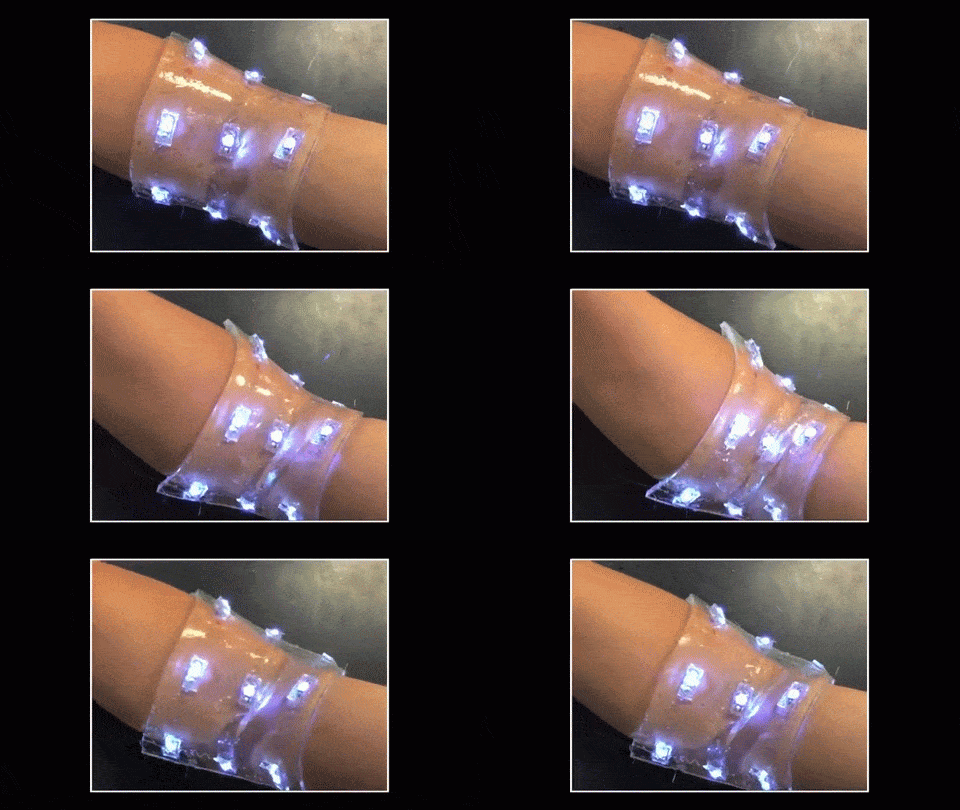
The Sticky, Stretchy and Smart Band-Aid of the Future

Smart Band-Aids

What it is: MIT researchers have developed a smart hydrogel that could one day be a standard bandage. The sticky, stretchy dressing has drug delivery channels, LED lights, and temperature sensors that can intelligently release medicine in response to body temperature or even alert the wearer to a low medicine supply.

Why it's important: Stretchable hydrogel electronics enable comfortable, easy-to-use health care monitoring and drug delivery. Future iterations of this wound dressing could be used to treat burns or deliver tiny electronics inside the body.

Adidas Converts Ocean Plastic into 3D-Printed Shoes

Ocean Saving 3D Printed Sneakers

What it is: Adidas and Parley for the Oceans have paired up on a 3D printed shoe made of ocean plastic. The Ocean Plastic shoe has an ocean plastic upper and a 3D printed midsole made of gill net and recycled polyster.

Why it's important: These shoes represent part of Adidas' effort to infuse exponential technology and sustainability into their core products.

Spotted by Marissa Brassfield

Spotted by Peter Diamandis

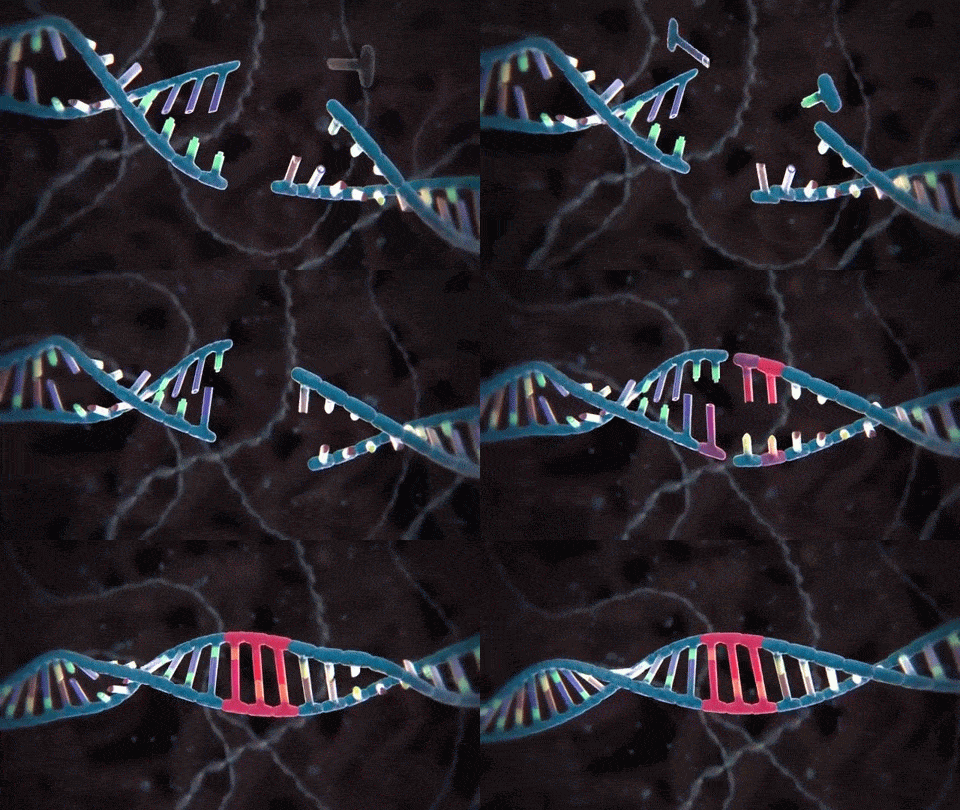
Cloning Humans? Factory Scientist Says It's Possible

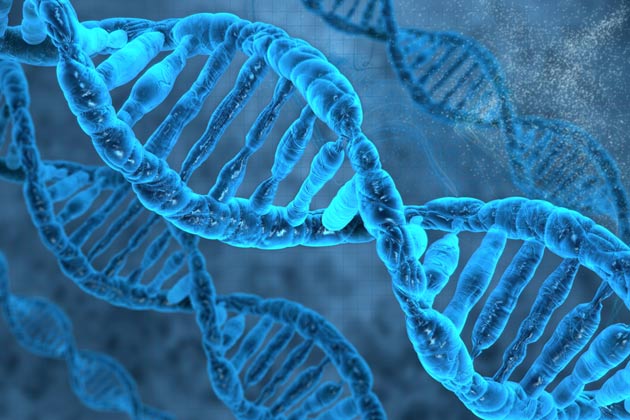
DNA strand

What it is: Could we clone humans one day? According to the scientists behind Boyalife Group, the technology is already here. Boyalife and its partners are currently building what will be the world's biggest cloning factory in Tianjin, China, and will be ready to go into production in under a year. Their primary focus is on cloning cows so that they can produce more Kobe-like beef for China's middle class without the need for cattle farms.

Why it's important: Here's one path to food abundance. What happens when we can produce premium proteins (beef, pork, poultry) that taste exactly like their conventionally raised counterparts, but don't require farmland, feed or slaughterhouses?

Spotted by Peter Diamandis

Software Eats Software Development

Andreessen Horowitz

What it is: Gigster has just raised a $10 million Series A round led by Andreessen Horowitz. The company hopes to change how software development is done, aided by artificial intelligence. An AI engine converts a client's product proposal into a development plan, while Gigster's remote developers insert code blocks to build the app quickly and inexpensively.

Why it's important: Gigster is even more evidence that software is disrupting software development. It's also a promising interface for entrepreneurs: all they need to do is articulate their app idea, and Gigster turns around a finished app -- no coding or managing freelancers required.

Spotted by Cody Rapp

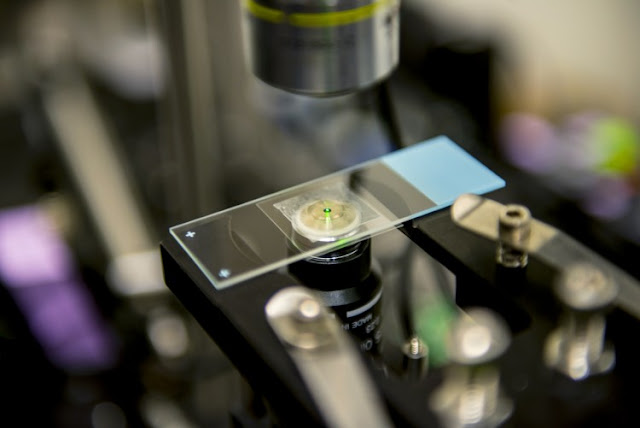
How to Make Diamond Objects with a Laser at Room Temperature

Diamonds made by Lasers

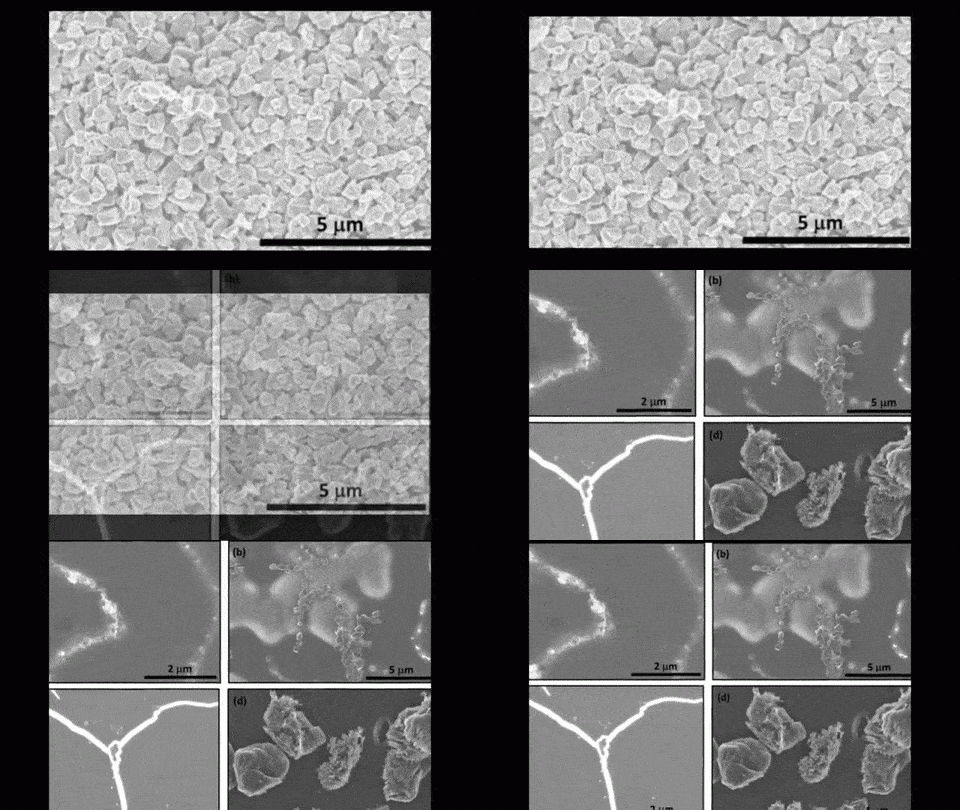
What it is: North Carolina State University researchers have discovered Q-carbon -- a new phase of solid carbon distinct from graphite and diamond -- and are using it to create diamond-related structures at ambient atmospheric pressure in air and at room temperature. KurzweilAI reports that Q-carbon is "ferromagnetic, harder than a diamond, glows when exposed to even low levels of energy, and can be used to create a variety of single-crystal diamond objects."

Why it's important: Q-carbon enables diamond microneedles or nanoneedles for a variety of purposes, from drug delivery to high-temperature switches. And its production solely takes place in the lab: According to the researchers, the only place Q-carbon might possibly appear in the natural world is in the core of some planets.

Spotted by Marissa Brassfield

We Can Now 3D Print Live Blood Vessels

3D Printed Blood Vessels

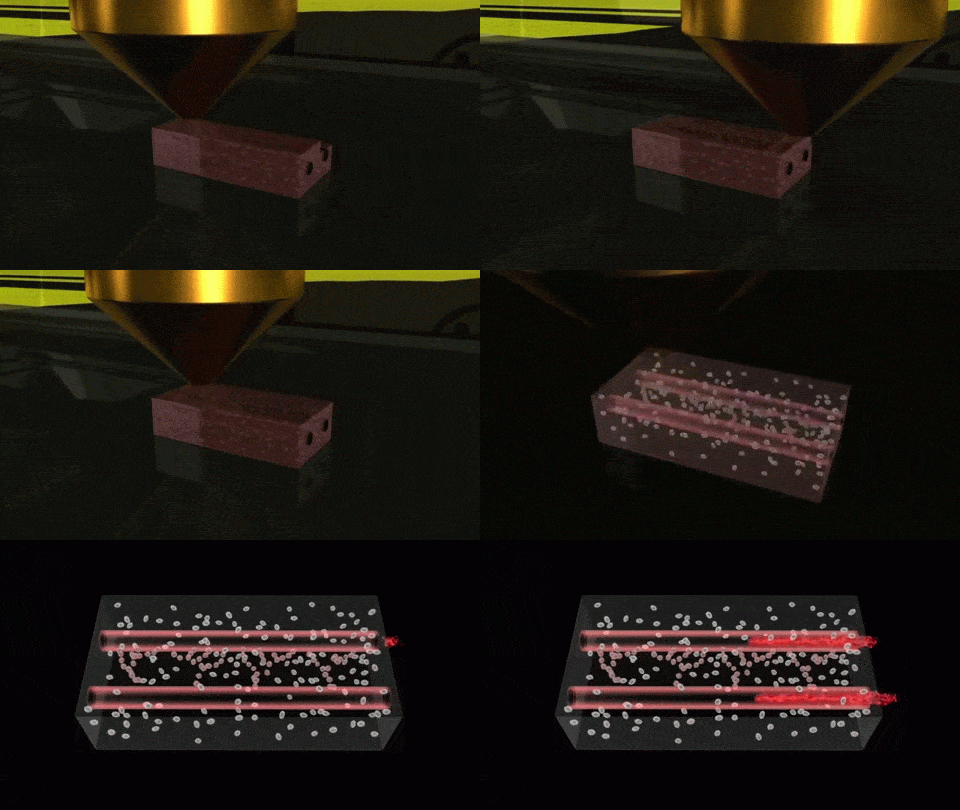
What it is: Lawrence Livermore National Laboratory researchers have just used "bio-ink" to 3D print live blood vessels. Research engineer Monica Moya says the process will "change the way we do biology... This technology can take biology from the traditional petri dish to a 3D physiologically relevant tissue patch with functional vasculature."

Why it's important: Artificial blood vessels could revolutionize treatment for patients with malfunctioning blood vessels, reducing or eliminating the need for tissue donors.

Spotted by Marissa Brassfield

Amazon Wants to Fill Your Living Room with Sensors and Cameras to Bring You Augmented Reality

Full Room Augmented Reality

What it is: Amazon recently filed two patents that indicate how they might leverage augmented reality in their ecommerce experience. One patent is for object tracking in a three-dimensional environment, while the other is a reflector-based depth mapping of a scene, as Bloomberg Business reports.

Why it's important: Amazon's patents show how the company is continually looking to disrupt itself. These ones in particular enable a magical experience: Imagine requesting a book, seeing that book pop open on a nearby surface, and then be able to read it (or trigger a voiceover) using voice or motion commands.

Spotted by Marissa Brassfield

MIT Boosts 3D Imaging Resolution 1,000-Fold Which Will Help 3D Printing and Driverless Cars

3D Imaging 1000x better

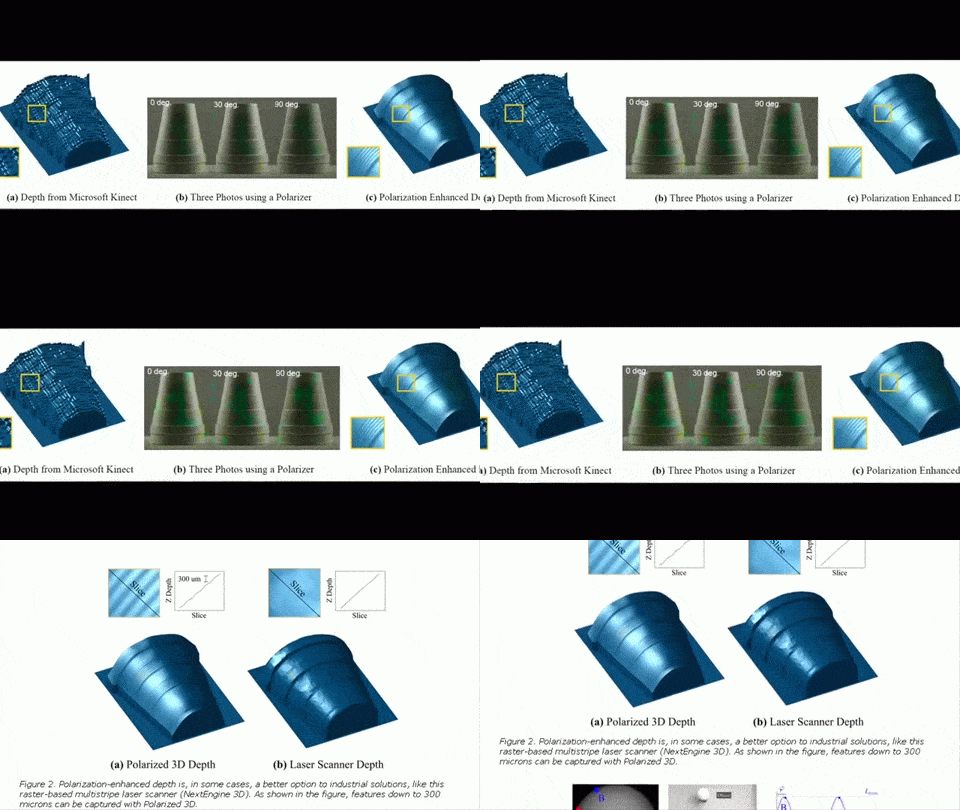
What it is: MIT researchers been able to increase the resolution of conventional 3D imaging devices 1,000x by exploiting the polarization of light.

Why it's important: Better 3D imaging resolution will accelerate autonomous car development. We might also see 3D cameras in future smartphones, enabling us to snap a photo of an object and send it to a 3D printer for replication.

Spotted by Marissa Brassfield

Las Vegas Uses Acoustic Monitoring to Maintain Pipe Integrity

Las Vegas

What it is: The Nevada Center for Excellence has installed a smart leak detection system -- the first of its kind -- on its pipeline that pinpoints leaks before they're detectable by current methods. Acoustic networked sensors and proprietary processing algorithms "hear" faint noises emitted by leaks, enabling water utility operators to take action before a pipeline leak becomes a major problem.

Why it's important: This IoT-enabled system enables the Las Vegas water district to keep water loss as low as possible -- 5% to 6%, compared to about 15% in typical municipal water distribution systems. Deployed at scale, metropolitan infrastructure would become significantly more efficient with water use -- and without any interruptions to current water service.

Spotted by Clyde Dennis

What is Abundance Insider?

This email is a briefing of the week's most compelling, abundance-enabling tech developments, curated by Marissa Brassfield in preparation for Abundance 360. Read more about A360 below.

Want more conversations like this?

At Abundance 360, Peter's 250-person executive mastermind, we teach the metatrends, implications and unfair advantages for entrepreneurs enabled by breakthroughs like those featured above. The program is highly selective and we're almost full, but we're still looking for a few final CEOs and entrepreneurs who want to change the world. You can apply here.

Know someone who would benefit from getting Abundance Insider? Send them to this link to sign up.


If you wish to stop receiving our emails or change your subscription options, please Manage Your Subscription
PHD Ventures , 800 Corporate Pointe, Culver City, CA 90230


Sunday, December 6, 2015

Fwd: new race to space


-------- Forwarded Message --------
Subject: new race to space
Date: Sun, 6 Dec 2015 10:04:31 -0800
From: Peter Diamandis <peter@diamandis.com>
Reply-To: peter@diamandis.com
To: STeve <stevescott@techacq.com>


Entrepreneurial space is looking up, way up. It's almost time to start drinking Tang again…

This is a blog about three exciting developments and what they mean:

  1. The Asteroid Resource Law: President signs Asteroid Resource Law
  2. Bezos vs. Musk: Race for reusable spaceships
  3. Finding Water on Mars – We found water! Now what?

[ Click to Tweet about this (you can edit before sending): http://ctt.ec/KWYB9 ]

New Asteroid Resource Law Signed by POTUS

After nearly three years of work, President Obama has just signed into law a piece of legislation that allows for private ownership of asteroidal materials.

Called the American Space Technology for Exploring Resource Opportunities In Deep Space (ASTEROIDS) Act, this law (part of the U.S. Commercial Space Launch Competitiveness Act -- H.R. 2262) is effectively the largest piece of resource legislature ever signed by a U.S. president.

Let me explain.

Over the last 15 years, we've discovered a large population of asteroids that come very close to the Earth – I call them the "Manhattan Islands" of space.

They are resource-rich, composed of materials that we find extremely valuable: fuels (hydrogen and oxygen), construction materials (nickel, iron, and cobalt), and platinum group metals (platinum, palladium, osmium, iridium) for strategic uses (like electronics).

Most of the large 250 meter to 1 kilometer rocks are worth trillions of dollars, and as such, they represent some of the most valuable real estate in our solar system. Even better, most of them are energetically easier to reach than the surface of the Moon.

This piece of legislation describes how a private company can mine, own and sell materials taken off asteroids.

Let the next "gold rush" begin.

Musk vs. Bezos: Private Reusable Spaceships

You might have seen the headlines that read, "Jeff Bezos beats Elon Musk in space race to create reusable rocket."

What is this all about?

Building reusable rockets is really the key to low-cost space travel and therefore opening the space frontier.

On November 23rd, the day before Thanksgiving 2015, Jeff Bezos' company Blue Origin pulled it off – they launched their New Shepard rocket to 329,839 feet (officially space, defined as 328,000 feet or 100 Km) and it landed vertically back on Earth, with the ability to refuel and launch again.

Massive congrats to the whole Blue Origin team!!

The flight attracted a lot of media attention.

But while the news media attempted to create a "Bezos vs Musk" space race, they missed a few critical points:

  • SpaceX had already demonstrated reusable vertical powered rocket landings years earlier with the Grasshopper "test vehicle" (as had SpaceShipOne with horizontal landings).
  • And, while New Shepard returned from 100 km altitude, it was only a suborbital vehicle (like SpaceShipOne) reaching a maximum velocity of Mach 3. This is in stark contrast to SpaceX's Falcon-9 first stage return from near orbital velocities (Mach 3 vs. Mach 30).

Check out Elon's Twitter storm below…

Elon's Twitter storm

Putting the media frenzy aside, what is most significant here is the growing commitment of private capital by billionaires like Elon Musk, Jeff Bezos, Paul Allen, Richard Branson and others in their attempt to open the space frontier.

Finally the future of space exploration and commercialization is no longer solely in the hands of a political process.

Water on Mars… Life on Mars… Humans on Mars

Recently NASA announced that their "Mars Reconnaissance Orbiter (MRO) has provided the strongest evidence yet that liquid water flows intermittently on present-day Mars."

Using an imaging spectrometer on the MRO, NASA identified hydrated minerals with patterns unique to flowing water.

Based on what we know about living organisms, you need to have water to have life.

In my opinion, our next Mars mission, scheduled to land on Mars in 2020, will discover that life exists there now.

The Mars 2020 Rover is a car-sized (10 x 9 x 7 foot) vehicle whose primary mission is to search for habitability and signs of life.

But this is just the beginning of a much larger initiative around the Red Planet.

Elon Musk's primary stated purpose in creating SpaceX is to help colonize Mars, to "make humanity a multi-planetary species."

More specifically, two years ago he announced more concrete objectives to provide a roundtrip price of $500,000 per person to Mars within the next 20 years (actually, he said 15 years, but let's cut him some slack).

An Exciting Time to Be Alive

Finally, while the race for asteroids, reusable rockets, and Mars is heating up, yet another race, the $30 Million Google Lunar XPRIZE, is about to take another leap forward. Stand by for news next week!

We are living during an age of incredible progress, where ideas once considered science fiction are now becoming science fact.

The rate of this progress is accelerating. With growing access to large sums of private risk capital, and powerful exponential technologies, there is little that we can't try.

We live during the most exciting time ever in human history.

This is the sort of conversation we explore at my 250-person executive mastermind group called Abundance 360.

The program is highly selective. If you'd like to be considered, apply here.

Share this with your friends, especially if they are interested in any of the areas outlined above.

P.S. Every week I send out a "Tech Blog" like this one. If you want to sign up, go to Diamandis.com and sign up for this and Abundance Insider.

P.P.S. I've just released a podcast with my dear friend Dan Sullivan called Exponential Wisdom. Our conversations focus on the exponential technologies creating abundance, the human-technology collaboration, and entrepreneurship. Head here to listen and subscribe: a360.com/podcast


If you wish to stop receiving our emails or change your subscription options, please Manage Your Subscription
PHD Ventures , 800 Corporate Pointe, Culver City, CA 90230


Avast logo

This email has been checked for viruses by Avast antivirus software.
www.avast.com


Saturday, December 5, 2015

Fwd: Abundance Insider: December 4 Edition


-------- Forwarded Message --------
Subject: Abundance Insider: December 4 Edition
Date: Fri, 4 Dec 2015 12:04:44 -0800
From: Peter Diamandis <peter@diamandis.com>
Reply-To: peter@diamandis.com
To: STeve <stevescott@techacq.com>


In this week's Abundance Insider: Affordable artificial photosynthesis, insect-inspired robot swarms, and brain-controlled telepresence bots.

Cheers,
Peter, Marissa, Cody, Maxx, Kelley and Greg

P.S. Send any tips to data@diamandis.com, and send your friends and family to this link to subscribe to Abundance Insider.

Telepresence Robot Takes Directions via Brain Signal

Brain-Controlled Telepresence            Bots

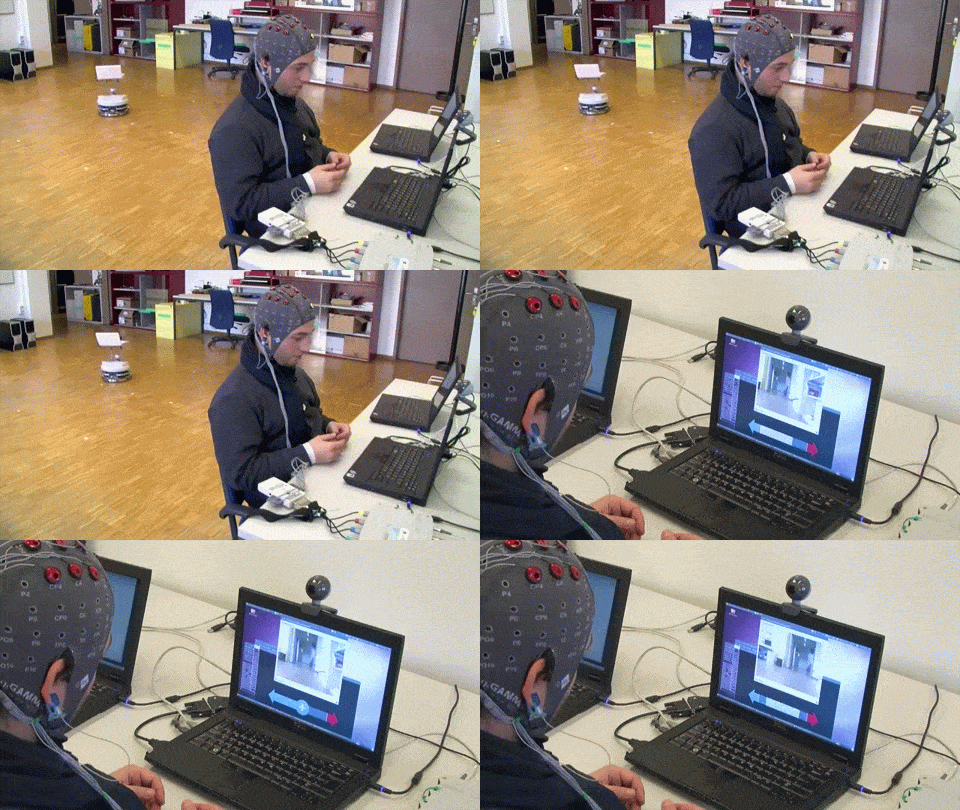
What it is: Italian and Swiss researchers have created a telepresence robot for the disabled that uses a brainwave-detecting headset to guide its navigation. The user imagines movements with their feet or hands, which each correspond to a different command. The robot parses these signals and uses its built-in programming to determine the best route and avoid obstacles.

Why it's important: Brain-computer interfaces have a number of powerful user applications -- everything from prosthetics to wheelchairs could benefit from more efficient control mechanisms. Non-invasive BCIs like this one mitigate the primary usage barriers (i.e. cost, difficulty) we see today.

Spotted by Marissa Brassfield

Phase-Change Smart Screens

Phase-Change Material Screens

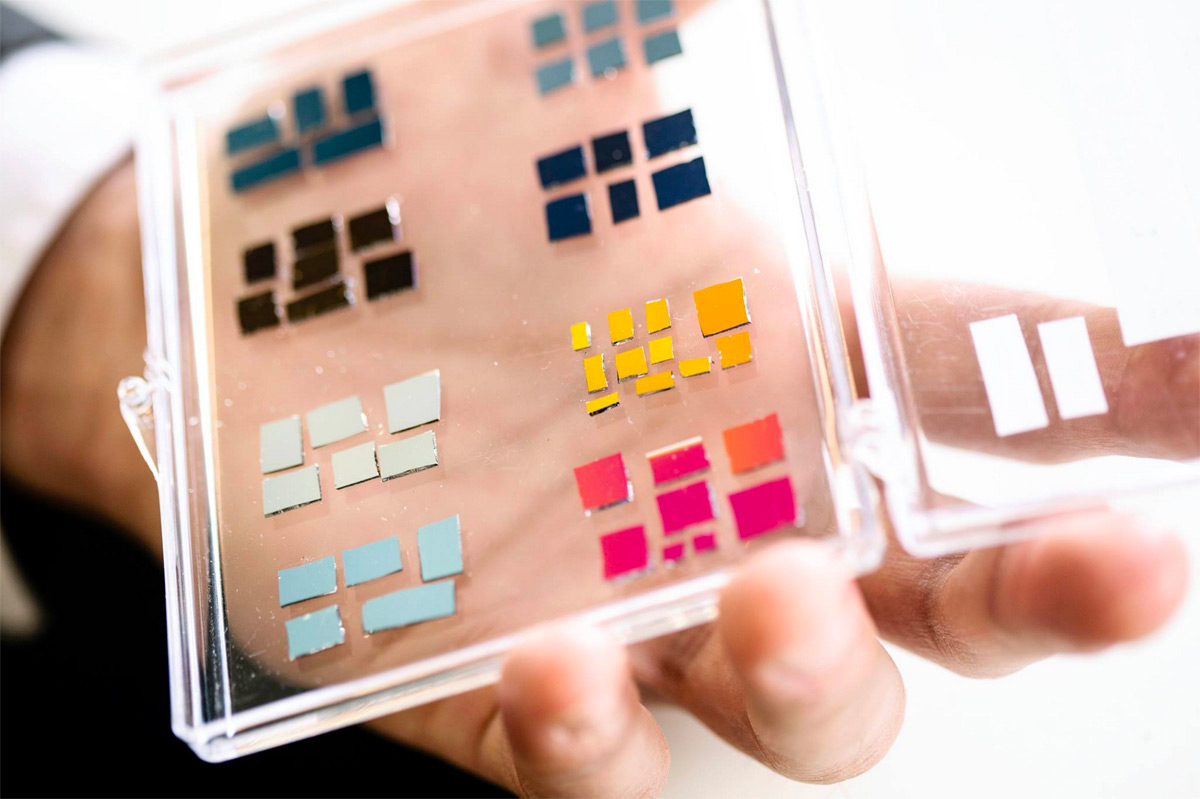
What it is: Bodle Technologies hopes to change how much energy your gadgets use. Its new display uses phase-change material -- which draws almost zero power -- to achieve crisp, vivid images even in direct sunlight.

Why it's important: Transparent displays that require little to no power would eliminate the battery drain on smartphones and wearables that users experience from screen brightness. The display's infrared-blocking property also enables smart windows that keep buildings cool without air conditioning.

Spotted by Marissa Brassfield

Artificial Pheromone-Based Swarm Robotics

Insect-Inspired Robot Swarms

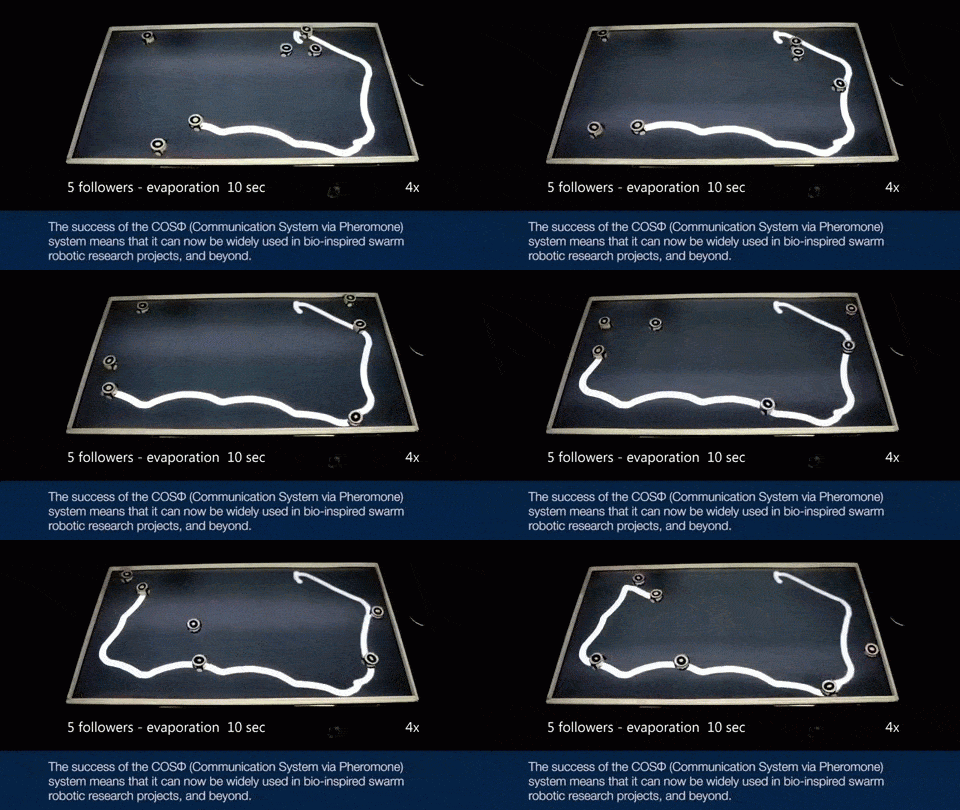
What it is: University of Lincoln specialists have created an artificial pheromone system that will revolutionize the field of swarm robotics. COS-phi (Communication System via Pheromone) uses an open-source localization system and an inexpensive, open-hardware micro robot. The system lets users simulate pheromones and tweak their strength for experiments. The swarm robots have light sensors that act like ants' antennae to detect the visual pheromones.

Why it's important: We're increasingly seeing ways in which technology can replicate biological behavior -- in this case, the swarming phenomenon of insects and ants. This particular breakthrough enables engineers to create accurate vehicle collision sensors, better surveillance, and better interactions between robots and their environment.

Spotted by Ian Pitchford

ShiftWear E-Ink Sneakers Let You Change Designs on the Fly

Personalized Smart Shoes

What it is: New York-based startup ShiftWear has created a prototype sneaker that could revolutionize how we purchase fashion. Its sneakers contain an E Ink display, which enables the wearer to change the sneaker's color and design from their smartphone. The durable, water-resistant shoes will have a 30-day battery life with walk-to-charge functionality and wireles charging capabilities. The ShiftWear app will also serve as a marketplace, with revenue sharing for designers who contribute designs.

Why it's important: The fashion industry was built on the notion of expressing oneself through clothing. By applying display technology used in cellphones and tablets to shoes, ShiftWear enables a new degree of on-demand personalization. And by raising funds through a crowdfunding campaign, they'll launch this breakthrough idea with a proven market and built-in community.

Spotted by Marissa Brassfield

Gadget Tells You What's Wrong With Your Air Conditioner by Listening

Sound-Sensitive HVAC            Maintenance

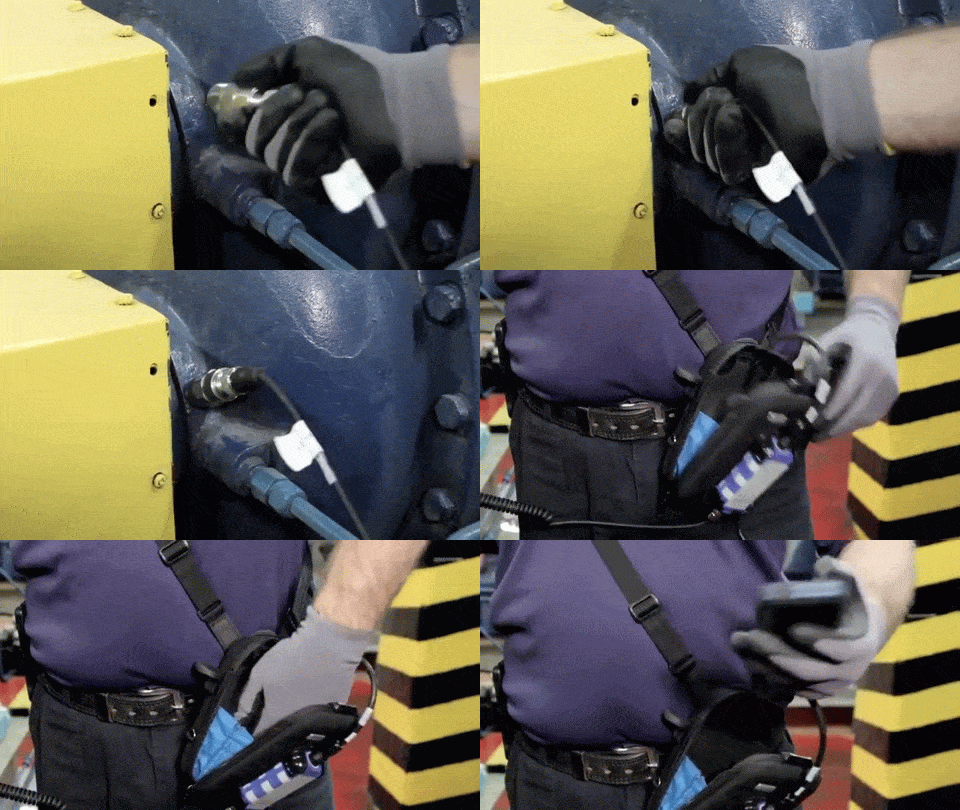
What it is: Augury uses sophisticated sensors and a companion app to diagnose bulky machines like those used in commercial buildings' heating, ventilation and cooling systems. A magnetic sensor attaches to a machine's body (e.g. pump, fan, central air-conditioning unit) and collects vibration and ultrasonic sensor data, then transfers this data to the cloud for analysis against Augury's vast dataset. A companion app displays the resulting diagnosis minutes later.

Why it's important: The convergence of sensors, cloud computing and data mining enables Augury to pinpoint issues in big, complicated machines before they turn into big problems -- saving its clients considerable maintenance costs. Imagine similar sensors in consumer appliances: for example, a refrigerator displaying exactly what replacement parts it needs.

Spotted by Marissa Brassfield

3D Printer Creates Objects at 1 cm/min

Insanely Fast 3D Printers

What it is: The NX1 3D printer by Nexa3D uses a novel technique called self-Lubricant Sublayer Photocuring (LSPc), which prints at 1 centimeter per minute -- significantly faster than most bottom-up 3D printing systems. Its laser projection system essentially "grows" objects from a pool of UV-curable resin, according to Digital Trends.

Why it's important: Makers, consumers and entrepreneurs can truly print objects on demand, in real time -- dematerializing and demonetizing manufacturing and retail.

Spotted by Marissa Brassfield

Affordable Artificial Photosynthesis

artificial photosynthesis

What it is: Florida State University researchers have created a material that enables simple, efficient and cheap artificial photosynthesis. A single-layer manganese oxide material traps sunlight and simplifies the energy breakdown into hydrogen and oxygen.

Why it's important: Imagine hydrogen-fueled cars that self-generate some of their supply, or oxygen-generating rooftops that don't need plant beds.

Spotted by Marissa Brassfield

Infrared Laser Refrigeration

Infrared Laser Refrigeration

What it is: University of Washington researchers have tweaked an infrared laser to cool water and other liquids by 36 degrees Fahrenheit -- a breakthrough in the field. "Using laser cooling, it may be possible to prepare slow-motion movies of life in action," said senior author Peter Pauzauskie. "And the advantage is that you don't have to cool the entire cell, which could kill it or change its behavior."

Why it's important: Higher-powered lasers tend to melt down and overheat. This technology could enable higher-power lasers in the defense, manufacturing and telecommunications industries.

Spotted by Marissa Brassfield

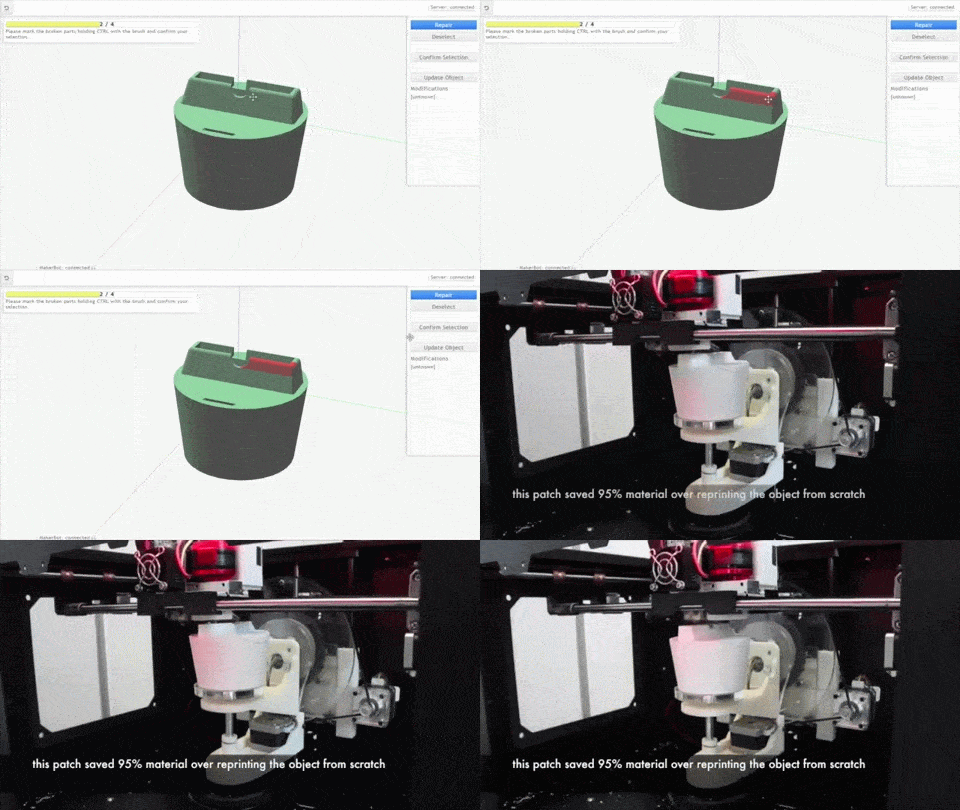
Self-Repairing 3D Printers

Self-Repairing 3D Printers

What it is: Researchers from the Hasso-Plattner-Institut have created a 3D printer that can make modifications to existing plastic prototypes -- essentially fixing its own mistakes.

Why it's important: This functionality dramatically reduces the need for raw materials and also accelerates the process of modifying or repairing 3D printed models.

Spotted by Marissa Brassfield

Breakthrough Energy Coalition Fund Launched

Bill Gates

What it is: Bill Gates, Mark Zuckerberg and 27 other billionaires have just launched the Breakthrough Energy Coalition, a fund dedicated to research on technical solutions for climate change. The Independent reports that the government needs to augment its research with "...the skills and resources of leading investors with experience in driving innovation from the lab to the marketplace."

Why it's important: Technophilanthropists and abundance-minded entrepreneurs now have the power to create the kind of change that was previously limited to governments and heads of state.

Spotted by Eli Call

Real-Time Neural Imaging

Real-Time Neural Imaging

What it is: For the first time ever, researchers have imaged mammalian neural activity in real time. Duke and Stanford researchers created a technique to watch the brain's neurons in action, combining genetically encoded voltage indicators with a protein that quickly senses neural voltage potentials. It displays activity at a temporal (time) resolution of 0.2 milliseconds, which is 2,000 times faster than a blink.

Why it's important: KurzweilAI reports that this real-time neural imaging "...enables in vivo optical studies of neuronal electrophysiology and coding and motivate[s] further advancements in high-speed microscopy."

Spotted by Marissa Brassfield

What is Abundance Insider?

This email is a briefing of the week's most compelling, abundance-enabling tech developments, curated by Marissa Brassfield in preparation for Abundance 360. Read more about A360 below.

Want more conversations like this?

At Abundance 360, Peter's 250-person executive mastermind, we teach the metatrends, implications and unfair advantages for entrepreneurs enabled by breakthroughs like those featured above. The program is highly selective and we're almost full, but we're still looking for a few final CEOs and entrepreneurs who want to change the world. You can apply here.

Know someone who would benefit from getting Abundance Insider? Send them to this link to sign up.


If you wish to stop receiving our emails or change your subscription options, please Manage Your Subscription
PHD Ventures , 800 Corporate Pointe, Culver City, CA 90230


Avast logo

This email has been checked for viruses by Avast antivirus software.
www.avast.com


Friday, December 4, 2015

Fw: Abundance Insider: December 4 Edition


From: Peter Diamandis <peter@diamandis.com>
Sent: Friday, December 4, 2015 12:04 PM
To: STeve
Reply To: peter@diamandis.com
Subject: Abundance Insider: December 4 Edition

In this week's Abundance Insider: Affordable artificial photosynthesis, insect-inspired robot swarms, and brain-controlled telepresence bots.

Cheers,
Peter, Marissa, Cody, Maxx, Kelley and Greg

P.S. Send any tips to data@diamandis.com, and send your friends and family to this link to subscribe to Abundance Insider.

Telepresence Robot Takes Directions via Brain Signal

Brain-Controlled Telepresence Bots

What it is: Italian and Swiss researchers have created a telepresence robot for the disabled that uses a brainwave-detecting headset to guide its navigation. The user imagines movements with their feet or hands, which each correspond to a different command. The robot parses these signals and uses its built-in programming to determine the best route and avoid obstacles.

Why it's important: Brain-computer interfaces have a number of powerful user applications -- everything from prosthetics to wheelchairs could benefit from more efficient control mechanisms. Non-invasive BCIs like this one mitigate the primary usage barriers (i.e. cost, difficulty) we see today.

Spotted by Marissa Brassfield

Phase-Change Smart Screens

Phase-Change Material Screens

What it is: Bodle Technologies hopes to change how much energy your gadgets use. Its new display uses phase-change material -- which draws almost zero power -- to achieve crisp, vivid images even in direct sunlight.

Why it's important: Transparent displays that require little to no power would eliminate the battery drain on smartphones and wearables that users experience from screen brightness. The display's infrared-blocking property also enables smart windows that keep buildings cool without air conditioning.

Spotted by Marissa Brassfield

Artificial Pheromone-Based Swarm Robotics

Insect-Inspired Robot Swarms

What it is: University of Lincoln specialists have created an artificial pheromone system that will revolutionize the field of swarm robotics. COS-phi (Communication System via Pheromone) uses an open-source localization system and an inexpensive, open-hardware micro robot. The system lets users simulate pheromones and tweak their strength for experiments. The swarm robots have light sensors that act like ants' antennae to detect the visual pheromones.

Why it's important: We're increasingly seeing ways in which technology can replicate biological behavior -- in this case, the swarming phenomenon of insects and ants. This particular breakthrough enables engineers to create accurate vehicle collision sensors, better surveillance, and better interactions between robots and their environment.

Spotted by Ian Pitchford

ShiftWear E-Ink Sneakers Let You Change Designs on the Fly

Personalized Smart Shoes

What it is: New York-based startup ShiftWear has created a prototype sneaker that could revolutionize how we purchase fashion. Its sneakers contain an E Ink display, which enables the wearer to change the sneaker's color and design from their smartphone. The durable, water-resistant shoes will have a 30-day battery life with walk-to-charge functionality and wireles charging capabilities. The ShiftWear app will also serve as a marketplace, with revenue sharing for designers who contribute designs.

Why it's important: The fashion industry was built on the notion of expressing oneself through clothing. By applying display technology used in cellphones and tablets to shoes, ShiftWear enables a new degree of on-demand personalization. And by raising funds through a crowdfunding campaign, they'll launch this breakthrough idea with a proven market and built-in community.

Spotted by Marissa Brassfield

Gadget Tells You What's Wrong With Your Air Conditioner by Listening

Sound-Sensitive HVAC Maintenance

What it is: Augury uses sophisticated sensors and a companion app to diagnose bulky machines like those used in commercial buildings' heating, ventilation and cooling systems. A magnetic sensor attaches to a machine's body (e.g. pump, fan, central air-conditioning unit) and collects vibration and ultrasonic sensor data, then transfers this data to the cloud for analysis against Augury's vast dataset. A companion app displays the resulting diagnosis minutes later.

Why it's important: The convergence of sensors, cloud computing and data mining enables Augury to pinpoint issues in big, complicated machines before they turn into big problems -- saving its clients considerable maintenance costs. Imagine similar sensors in consumer appliances: for example, a refrigerator displaying exactly what replacement parts it needs.

Spotted by Marissa Brassfield

3D Printer Creates Objects at 1 cm/min

Insanely Fast 3D Printers

What it is: The NX1 3D printer by Nexa3D uses a novel technique called self-Lubricant Sublayer Photocuring (LSPc), which prints at 1 centimeter per minute -- significantly faster than most bottom-up 3D printing systems. Its laser projection system essentially "grows" objects from a pool of UV-curable resin, according to Digital Trends.

Why it's important: Makers, consumers and entrepreneurs can truly print objects on demand, in real time -- dematerializing and demonetizing manufacturing and retail.

Spotted by Marissa Brassfield

Affordable Artificial Photosynthesis

artificial photosynthesis

What it is: Florida State University researchers have created a material that enables simple, efficient and cheap artificial photosynthesis. A single-layer manganese oxide material traps sunlight and simplifies the energy breakdown into hydrogen and oxygen.

Why it's important: Imagine hydrogen-fueled cars that self-generate some of their supply, or oxygen-generating rooftops that don't need plant beds.

Spotted by Marissa Brassfield

Infrared Laser Refrigeration

Infrared Laser Refrigeration

What it is: University of Washington researchers have tweaked an infrared laser to cool water and other liquids by 36 degrees Fahrenheit -- a breakthrough in the field. "Using laser cooling, it may be possible to prepare slow-motion movies of life in action," said senior author Peter Pauzauskie. "And the advantage is that you don't have to cool the entire cell, which could kill it or change its behavior."

Why it's important: Higher-powered lasers tend to melt down and overheat. This technology could enable higher-power lasers in the defense, manufacturing and telecommunications industries.

Spotted by Marissa Brassfield

Self-Repairing 3D Printers

Self-Repairing 3D Printers

What it is: Researchers from the Hasso-Plattner-Institut have created a 3D printer that can make modifications to existing plastic prototypes -- essentially fixing its own mistakes.

Why it's important: This functionality dramatically reduces the need for raw materials and also accelerates the process of modifying or repairing 3D printed models.

Spotted by Marissa Brassfield

Breakthrough Energy Coalition Fund Launched

Bill Gates

What it is: Bill Gates, Mark Zuckerberg and 27 other billionaires have just launched the Breakthrough Energy Coalition, a fund dedicated to research on technical solutions for climate change. The Independent reports that the government needs to augment its research with "...the skills and resources of leading investors with experience in driving innovation from the lab to the marketplace."

Why it's important: Technophilanthropists and abundance-minded entrepreneurs now have the power to create the kind of change that was previously limited to governments and heads of state.

Spotted by Eli Call

Real-Time Neural Imaging

Real-Time Neural Imaging

What it is: For the first time ever, researchers have imaged mammalian neural activity in real time. Duke and Stanford researchers created a technique to watch the brain's neurons in action, combining genetically encoded voltage indicators with a protein that quickly senses neural voltage potentials. It displays activity at a temporal (time) resolution of 0.2 milliseconds, which is 2,000 times faster than a blink.

Why it's important: KurzweilAI reports that this real-time neural imaging "...enables in vivo optical studies of neuronal electrophysiology and coding and motivate[s] further advancements in high-speed microscopy."

Spotted by Marissa Brassfield

What is Abundance Insider?

This email is a briefing of the week's most compelling, abundance-enabling tech developments, curated by Marissa Brassfield in preparation for Abundance 360. Read more about A360 below.

Want more conversations like this?

At Abundance 360, Peter's 250-person executive mastermind, we teach the metatrends, implications and unfair advantages for entrepreneurs enabled by breakthroughs like those featured above. The program is highly selective and we're almost full, but we're still looking for a few final CEOs and entrepreneurs who want to change the world. You can apply here.

Know someone who would benefit from getting Abundance Insider? Send them to this link to sign up.


If you wish to stop receiving our emails or change your subscription options, please Manage Your Subscription
PHD Ventures , 800 Corporate Pointe, Culver City, CA 90230


Fwd: How to sell high-end, in a world of free info


---------- Forwarded message ----------
From: Danny @ Mirasee <support@mirasee.com>
Date: Fri, Dec 4, 2015 at 12:49 PM
Subject: How to sell high-end, in a world of free info
To: stevescott@techacq.com


Do you believe that people won't want to pay for high-end packages, when there's already so much information available for free? Let's talk.

Hi steve,

Earlier this week, I wrote to you about the "value ladder" trap, and how you're *much* better off selling high-end packages, especially in the early days of your business.

Now today, I want to dig deeper on that, and explore some of the "head trash" that might be keeping you from giving it a shot.

Specifically, I want to explore the (false) belief that people won't want to pay for high-end packages, especially when there's already so much information that's available for free on the internet.

Because, yeah, sure, it's true: there's a lot of free (or cheap) information out there...

...but information doesn't lead to transformation.

If you've followed my work for a while, or read my book Teach and Grow Rich, then you know what I'm talking about; it's the difference between information and education.

Information... well, it informs.

Education, on the other hand, TRANSFORMS.

And what people want isn't more information, it's real transformation... and they can't get that from a free article or blog post.

Think about it: if free or low-cost information was all that someone needed to create the outcome they want, then everyone would...

...be fit and healthy...

...have a happy relationship...

...work in their dream job...

...and be successful in their entrepreneurial pursuits.

But in reality...

...1/3 Americans are obese...

...50% of marriages end in divorce...

...70% of people report being unsatisfied in their jobs...

...and 80% of small businesses go under in their first year.

If people could create the changes they want in their lives just with the information about how to do it, they would have done it by now.

What they need is transformative help from people like you, and many people (the proportion might surprise you!) are more than happy to pay for that outcome.

Wondering where those people are hanging out?

First of all, let me say one thing: it's not where you think. ;-)

And rather than continue this email for pages and pages, let me point you to my friend Bill Baren's just-released new report:

Mystery Solved: Where to REALLY Find High Paying Clients

(Seriously; the report runs 27 pages, and I just didn't want to go on for that long in an email... especially not when this is a topic that Bill just knows more about than I do, anyway!) ;-)

In the report, Bill goes through exactly where to find premium clients, who they are, and how to market to them.

I've learned a lot from Bill over the past year that we've become friends, and I know that you'll get a lot from this report, and the other stuff he's got coming.

So go grab it, and make some time this weekend to read through it,

Danny Iny
Founder/CEO at Mirasee

P.S. Not interested in training about how to sell high-priced coaching services from my friend Bill Baren? Just click this link, and I won't send you anything further on the topic:

I'm not interested in learning how to sell high-end coaching services

Just remember, even if you aren't thinking of applying these ideas now, it's still something you may want to do in the future, so it's probably a good idea to keep your eyes and ears open to good ideas. ;-)

P.P.S. In case you're wondering, you're receiving this email because - as a member of our community - you're entitled to receive these complimentary updates about valuable training opportunities from Mirasee-approved online experts. If you no longer wish to receive emails about ANY of our partner updates, click on this link:

Unsubscribe me from ALL Special Offers from Mirasee Partners

P.P.P.S. As I'm sure you know, when I tell you about something on offer from one of our partners, I sometimes use an affiliate link, which means that if you end up buying something from them, I'll earn a small commission (at no extra cost to you, of course). Other times, I just use a direct link, and won't get paid anything. Either way, affiliate commissions represents a very small portion of our business revenues (less than 5% last year), and I'd never jeopardize your trust in me by pointing you towards something I don't believe can help you.

Mirasee   2151 Harvard, Suite 103    Montreal,  Quebec   H4A 2W1   Canada

You received this email because you are subscribed to the Mirasee mailing list.

Adjust your subscription settings to receive less email.

Or unsubscribe from all future emails