Thursday, June 25, 2020

Fwd: Thinking Like A Futurist is the #1 Skill For Leaders: Here's How to Master It


---------- Forwarded message ---------
From: Jacob Morgan via LinkedIn <newsletters-noreply@linkedin.com>
Date: Thu, Jun 25, 2020 at 6:17 AM
Subject: Thinking Like A Futurist is the #1 Skill For Leaders: Here's How to Master It
To: Steve Scott <stevescott@techacq.com>


This is part of LinkedIn's new Newsletter Series. To get weekly exclusive CEO...
LinkedIn

Steve Scott

Steve Scott
 
NEWSLETTER ON LINKEDIN
The Future of Work

Thinking Like A Futurist is the #1 Skill For Leaders: Here's How to Master It

Newsletter cover image

This is part of LinkedIn's new Newsletter Series. To get weekly exclusive CEO interviews, and insights on leadership, the future of work, and employee experience hit the "subscribe" button above.

What's the top skill leaders need to succeed over the next decade and beyond? According to my interviews with more than 140 top CEOs, far and away the most needed skill is being able to think like a futurist. 

Contrary to what some people believe, futurists don't predict the future. Instead, they help make sure individuals and organizations aren't surprised by what the future might bring. Thinking like a futurist involves looking at different possibilities and scenarios as opposed to picking one path and sticking to it. 

Why Thinking Like a Futurist Matters

Most leaders use the old way of thinking where they find one possible scenario for the future and plan everything around it. But as the world starts changing even faster and the number of possibilities grows wildly, leaders and organizations need to be able to adapt and prepare for numerous possible scenarios and outcomes. That's where thinking like a futurist comes in.

Being able to think like a futurist is a crucial skill because companies that aren't prepared for the future will have a much harder time adapting and will likely get disrupted. Change comes fast, and we must keep an eye towards the future and be prepared for whatever will happen.

No alt text provided for this image

I interviewed Alfredo Perez, CEO of Alicorp in Peru, and he said this: "The fact is that adapting to change is not enough; we need to lead change and create the future. Adapting is keeping your head above water, but leading and creating is sailing on top of it."

Companies that are led by futurists will be able to sail on top of the water and create change instead of struggling to evolve as the changes come quickly. With things changing so rapidly, leaders must be able to respond to and ideally anticipate change and have plans in place to address them.

How to Think Like a Futurist

One common method for thinking like a futurist is to look through the cone of possibilities. As you peer from one end of the cone, things that could happen within the next days or months are fairly clear. However, the cone gets wider with more possibilities when things are further away and not as clear. Things towards the center of the cone are more likely, as opposed to things on the edges that become less and less likely. Thinking through the cone of possibilities opens your eyes to potential scenarios according to how likely they are to occur.

To think like a futurist, you must look beyond what could happen in the next weeks or months. You have to be open to the entire cone of possibilities. The point is to think in terms of possibilities and scenarios and be open to numerous situations. 

Many of us practice this way of thinking in our personal lives as we make big decisions like getting married or buying a house. We think through different scenarios for these long-term decisions to ensure we're making a good choice, like considering our long-term compatibility with a partner or how the value will increase on a home. We need to extend the same way of thinking to our long-term business decisions. 

I recommend asking yourself four questions when thinking through potential future decisions:

  • Why might "this" happen or not happen?
  • What else might happen? 
  • What do I want to happen and how can I make it happen?
  • What factors might influence why this will or won't happen? 

Asking yourself those questions for various scenarios can open your mind to new possibilities and help you decide what outcomes are the most likely. With that mindset, you can start to prepare yourself and your organization for the future.

We also need to look towards the future and keep an eye on the horizon for potential trends and changes. We can't afford to wait until something is right in front of us to pay attention to it. Stay informed on what's going on in the world, how technology is being developed, and what your competitors are doing. This information can help you be aware of how the world is changing and let you know what you can do to prepare. 

Thinking like a futurist is a skill that takes time to develop. Putting yourself in the right mindset and being open to new possibilities can help train your mind to consider the future and be prepared for whatever comes your way.

140 of the world's top CEOs identified a specific set of 9 skills & mindsets that are crucial for leaders to master. Learn what they are and hear directly from these leaders by downloading the PDF below.

No alt text provided for this image

______________________________________________________________

If you enjoyed the article and want more content like this here's what you can do:

No alt text provided for this image

1. Subscribe to The Future of Work Podcast where I interview business leaders around the world each week. 

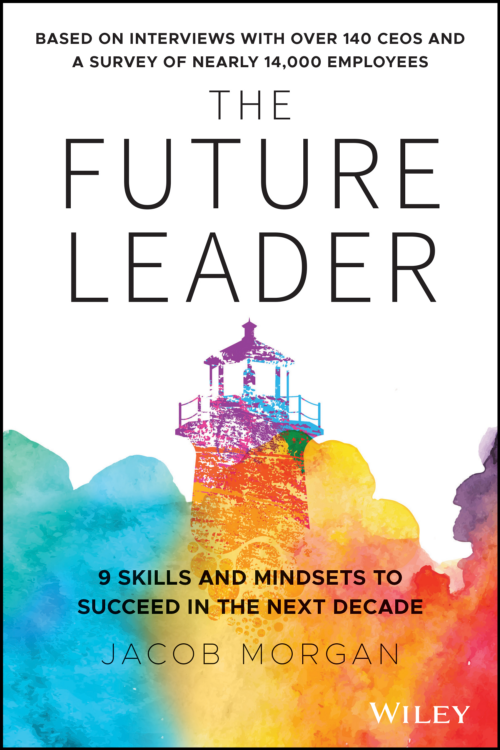
2. Grab a copy of The Future Leader which has been endorsed by the CEOs of MasterCard, Best Buy, Oracle, Audi, Unilever, Domino's Pizza, Ritz Carlton, Kaiser, and Marshall Goldsmith. It explores the most essential skills and mindsets for future leaders.

3. If you are or want to be an entrepreneur then my wife and I just launched a brand new podcast on how to Be Your Own Boss, called the BYOB Podcast where we share what we did and how we did. You can subscribe to that here.

Know someone who might be interested in this newsletter? Share it with them.

NEWSLETTER ON LINKEDIN Share this series on LinkedIn Share this series on Faceoobk Share this series on Twitter
Unsubscribe  |   Help

You are receiving LinkedIn notification emails.

This email was intended for Steve Scott (Independent Director/Interim CEO | Growth - Funding - Scaling Strategist | Venture | CEO Advisor | Speaker). Learn why we included this.

LinkedIn

© 2020 LinkedIn Corporation, 1000 West Maude Avenue, Sunnyvale, CA 94085. LinkedIn and the LinkedIn logo are registered trademarks of LinkedIn.

Saturday, June 13, 2020

Vince Villegas


I can't keep up. I just can't. I'm stressed. I'm exhausted trying to figure out what we're all supposed to do, believe, and be offended and outraged by next. And if you question something or don't see it the same as another person everyone feels the right to put you in your place. I am not even sure where my place is anymore!

Two months ago, First Responders were all the rage. In fact, they were heroes. We gave them free coffee, meals, and cheers as they drove by.Today we hate them and want them defunded because they can't be trusted.

Two months ago, truck drivers were the heroes, as well, for keeping America moving and the grocery stores stocked. Today we block the roads with protesters, drag them out of the cabs and beat them half to death.

Nurses and Doctors are still cool for now. But they may be unemployed. They too are heroes, unless of course they truly believe all lives matter. Then they're filled with hate and are part of problem like so many others.

Just 45 days ago protests weren't "essential" and were considered criminal, selfish and a murderous activity. Today they are gloriously critical and celebrated. All of the obvious criminal and murderous activities are simply ignored. If you protest about lockdowns for freedom, you are selfish and you will spread a virus. If you protest, loot, and riot for social justice, you are a warrior and the virus cedes.

Trust the experts. No, not those experts. Don't wear masks ... wear masks, but only good ones. Wait, don't wear masks, wear anything as a mask. Nevermind on the masks. Not sure, but if you don't, you hate people because you could be an asymptomatic spreader. Wait. That's not a thing anymore?

For 3 months, NOTHING was more important than social distance. In fact, we gave up all of our liberties for it. We canceled schools, medical and dental procedures, yet allowed the murder of babies, canceled activities, closed businesses, eliminated every spring rite of passage from prom to graduation, denied people funerals, even at Arlington, and we wrecked the economy for it. Then came social justice, and social distance was no more. Now things are more cut and dry though. A thousand people at three memorials. It's a matter of respect. I believe in that respect and the respect of many other people who were hero's in their own right but were denied an opportunity to be laid to rest with their friends and family present. But you can only assemble 50 or less people. And let's not even talk about Weddings, goodness knows they could be the most dangerous of all gatherings.

Black Lives Matter. Of course they do. Then multiple black police officers and individuals were killed during the "peaceful protests". I don't see any outrage. Black individually owned businesses burned to the ground. Silence. Deadliest weekend in Chicago. NOTHING!!

I'm really confused now. Look at the data, NO, not that data. Do the math. No, you can't do the math like that. Only the experts can understand the data and math. What do you mean other cities/states/governors are interpreting the data differently? Pools are safe in Indiana, but not Michigan? Playgrounds are safe in your town but not mine? Amusement parks are safe in Florida but not Ohio, nor Michigan.

Just listen to the black community leaders. No, not them.

If you are silent you are part of the problem. If you speak, you are part of the problem. If you have to ask, you don't understand. If you don't ask, you don't care.

It's all so predictable, tedious, and exhausting. Nothing adds up. It's one gigantic common core Math life problem, with ever changing denominators that I'm sure the media and politicians are eagerly ready to solve for us....until the next "crisis". This all during an election year? We knew it would get ugly for this years election we just didn't know this is how they were going to go about it.

So for now I pray. I pray God will heal our land and bless the United States of America.

***Shared from a friend, feel free to share***

Saturday, June 6, 2020

This is a must read about white privilege.

I don't know who wrote this, but it's incredibly powerful and true. It deserves to be read, reflected on, widely shared, and discussed.

"It all started in grade school with Little Black Sambo.....
White people have been lied to.
We were lied to in school, for our entire education, indoctrinated by a white supremacist curriculum that neglects to teach a very large portion of our history in this country.
We were lied to when we were taught that slavery was as simple as black people being brought here as slaves, and then being freed after the civil war. When they left out the rape, the separation of families, the wet nursing of white babies, the murder, the continuation of indentured servitude long after slavery ended. They forgot to mention that children were taken whenever possible, because they could fit more of them into smaller spaces on a boat. That 15% of the people on the ship died before they even reached land, due to overheating, thirst, starvation, and violence. That suicide was so common that they put nets around the ship to catch those who tried to escape. That the lifespan of a worker on a sugar plantation was as little as seven years. In our history classes, they left out the black babies being used as alligator bait. When we were asked to debate the pros and cons of slavery, they indirectly taught us that there were "pros," even if that wasn't the intention.
We were lied to when we learned about Martin Luther King Jr. and it was implied that racism ended when the civil rights movement ended. Whenever we are taught about "how things used to be" it suggests that it isn't like that anymore.
We were lied to when the schools left out housing discrimination, job discrimination, and educational disparities as reasons why we are still not equal. When it is implied that, in America, we all have the same shot on the same playing field at greatness, we are being sold a lie, and because it makes us feel better to believe that lie, we do.
We were lied to when we were told not to see color, when we should have been told to see, appreciate, honor, and respect our differences as much as we appreciate what makes us the same.
We were lied to when we were taught that school segregation ended with Ruby Bridges. They forgot to mention the part where housing discrimination and job discrimination kept us segregated, even when the law did not. That it still keeps us segregated now.
We were lied to when we were taught that the police are here to help people. They didn't tell us that the amount of help you receive is inversely proportional to the amount of melanin in your skin. They didn't tell us that, when we believe that lie, and we ask the police for "help," other people die.
We were lied to when we were taught that the only way to be racist is to be overtly racist. When we were told that being a good person was enough. They did not teach us the part where being silently complicit in a system that has its roots in white supremacy, and benefitting from that system, is also racism. When we were told that being an ally just means that you're nice to black people or "don't see color." That we, as white people, can sit in discomfort when our loved ones spew racist rhetoric, and not say anything at all, because we "don't want to make waves," and still call ourselves allies. That we can "not be political" on our Facebook pages because we don't want to argue with family members with different beliefs. Guess what - when we are silent, because we don't want to upset our family members or friends - we are complicit in this system.
White people, we have been lied to. And you know what? I think a lot more of us know that than are willing to admit it. A friend said to me the other day "Because if I'm honest, I know you understand some of what we go through." And she was right. And now I'm saying the same to you. White people who pretend not to understand the problem in our country right now are LYING. Full stop. White people who victimize themselves by shedding tears when they are confronted with uncomfortable truths are ACTING. They know.
Until we are willing to risk our privilege by admitting it exists, we are contributing to a white supremacist system. The lies we have been told have been easy to believe, because they comfort us. There is privilege in that, too. Those lies that comfort us are bringing consistent harm to others.
It's time for white people to really be allies. To stop pretending we don't know any better and truly be allies. To get out of the freaking way and serve as a support system. To speak up when it's needed, but also to just be a support system. Being an ally doesn't mean speaking FOR someone. It means standing by their side and supporting them while they speak. Truly empowering them. And it means we have to deal with the discomfort that comes from admitting our privilege and doing what needs to be done to change the system, even if the current system works for us.
Otherwise, we will just spend the rest of our lives posting videos on Facebook of someone's father, uncle, cousin, son, sister, mother, aunt, grandma... being brutalized. At what point will we stop acting like we don't know any better?"


Sent from BlueMail

Friday, June 5, 2020

Fwd: Turning the microphone over


Like so many of us, I have struggled these past few days with what to say about the heartbreaking injustice that has shaken our country. This struggle pales in comparison to what the Black community is suffering through. Silence is not an option, and I'm glad to see so many people standing up to say what we should have been saying all along. Count me among them: racism, white supremacy, and fascism should have no place in our society. Black Lives Matter. Police reform and reparations are urgently needed. We must educate ourselves on the systemic issues the Black community faces and has faced regularly. And yet, those of us who identify as white in this society at this time may not be the best spokespeople or leaders for what needs to be done. I am fortunate to have colleagues at LTSE who put some thoughts together for our team and gave me permission to share them here. Without further ado, I am going to turn the microphone over to Mawulom Nenonene and Jeff Henry.
 

Hey everyone, 


We are sure everyone is well aware of the protests that have taken place in the last 72hrs, advocating for the value of Black lives. We are writing to provide you with context around what is happening. 


The national news is unsettling. Unfortunately the injustice and inequalities that stem from being treated differently because of race are woefully a normal reality for many. Acknowledge this moment, and the many emotions that come with it. We are not dealing with isolated occurrences, rather mindsets and behaviors cultivated through misinformation and intolerance.


The global pandemic which has, and continues to negatively impact the lives of many and has made it clear — that no matter what you identify as we are all connected. 


The protests that are taking place are the immediate result of the heinous acts of racial injustice that have come to light over the four weeks in addition to the compounding of interest of countless  Black lives that have been unjustly taken. Here are just some of the events published recently that likely incited today's riots: 

 
  • Tony McDade: Black transgender man killed in Tallahassee, Florida on May 27th, is at least the 12th violent death of a transgender or gender non-conforming person this year in the U.S. McDade was allegedly killed by police.
  • Ahmaud Arbery: A 25-year-old black man who was pursued by armed white residents of a coastal South Georgia neighborhood, and murdered while jogging. 
  • Breonna Taylor: Shortly after midnight on March 13, Louisville police, executing a search warrant, used a battering ram to crash into the apartment of Breonna Taylor, a 26-year-old African-American emergency room technician. After a brief confrontation, they fired several shots, striking her at least eight times.
  • Chris Cooper: Christian Cooper, an African American bird-watcher, who asked Amy Cooper, who is white, to put a leash on her dog in Central Park. She responded by threatening to call the police."I'm going to tell them there's an African American man threatening my life," she is heard on video saying.
  • George Floyd: In Minneapolis, George Floyd was held to the ground by a police officer kneeling on his neck during an arrest. He begged for the officer to stop torturing him. Like Eric Garner, he said he couldn't breathe. Three other police officers watched and did not intervene. Mr. Floyd was 46 years old.
 

Please understand, Black people are exhausted, angry, afraid, hopeful, and grieving -- all at the same time. 


Tamika Mallory, one of the co-founders of the women's march and a social activist captured it best in this recent speech, please watch the full video, it's a 2:47 minute clip but every second is worth watching: https://twitter.com/lsarsour/status/1266560242390904832


Jeff here, sharing an account of what the last 72hrs have been like in Oakland: 


These protests are real and so is the looting that is happening. For those that don't know, I live in downtown Oakland which has been one of the protest flashpoints. On Friday night, the Target near my house, which is where I go to get the majority of my essentials, was looted and set on fire. I could smell the smoke from my apartment and I could hear the police sirens and helicopters circling my block. Beyond my own personal fear, I received a call from my friend, a young Black man who lives above that Target and works in finance at Google. He ran out of his apartment when the fire alarms went off and he asked me if he could shelter at my apartment out of fear for his own safety. On Saturday, he told me he left the city because protesters on twitter claimed they were going to burn his apartment building down. 


On Saturday, as I left my house to better understand what had happened the night before, I witnessed a number of businesses looted and destroyed, the Target mentioned above, several car dealerships and groceries stores. To be frank, it felt scary and dystopian. 


Later in the day, I received a call from another friend, a Black woman who works in PR at Netflix. She also needed shelter because the Target by her home in Emeryville was being looted and she was afraid because she is a Black woman living alone in an apartment with a street level entrance. 


Beyond the fear, the most important observation I made was that the majority of the looters were white. Which is important to note, because when the dust has settled, the black community will likely be blamed for the destruction -- and also likely, any ensuing uptick in COVID-19 cases due to the breaking of social distancing.


What is happening is frustrating for many reasons -- critical resources are being cut off from an at risk community during a pandemic, Black people are being put at risk because of these protests, and organizations that employ large numbers Black and Latinx people are being handicapped, potentially preventing these people from collecting a paycheck to support their families. 


One of the reasons we joined LTSE was because of the understanding that companies need to evolve and become active participants in society in order to be responsible capitalist in the 21st century. That is true now. Our partner, The Plug has compiled a running list of organizations that have become public on the issues of the day -- here are just a few familiar companies from that list as well as others that have come forward: American Express, Box, Salesforce, Slack, Twillio, Nike, Netflix, TikTok, Airbnb, Cisco, Grubhub, Target, Reebok, Amazon, Apple, Zoom, Square, Postmates. There are 30 companies that have come forward to date as of their accounting. 


We were most impressed by Target's stance, considering a number of their retail stores have been looted. Statement linked here and outlined below: 


We are a community in pain. That pain is not unique to the Twin Cities—it extends across America. The murder of George Floyd has unleashed the pent-up pain of years, as have the killings of Ahmaud Arbery and Breonna Taylor. We say their names and hold a too-long list of others in our hearts. As a Target team, we've huddled, we've consoled, we've witnessed horrific scenes similar to what's playing out now and wept that not enough is changing. And as a team we've vowed to face pain with purpose.     


Every day, our team wakes up ready to help all families—and on the hardest days we cling even more dearly to that purpose. As I write this, our merchant and distribution teams are preparing truckloads of first aid equipment and medicine, bottled water, baby formula, diapers and other essentials, to help ensure that no one within the areas of heaviest damage and demonstration is cut off from needed supplies.


Our store and HR teams are working with all of our displaced team members, including the more than 200 team members from our Lake Street store in Minneapolis. We will make sure they have their full pay and benefits in the coming weeks, as well as access to other resources and opportunities within Target. We'll continue to invest in this vibrant crossroads of the Seward, Longfellow, Phillips and Powderhorn communities, preserving jobs and economic opportunity by rebuilding and bringing back the store that has served as a community resource since 1976. In any of our other locations that are damaged or at risk, the safety and well-being of our team, guests and the surrounding community will continue to be our paramount priority.


It's hard to see now, but the day will come for healing—and our team will join our hearts, hands and resources in that journey. Even now, Target leaders are assembling community members, partners and local officials to help identify what more we can do together and what resources are required to help families, starting right here in Minnesota.


Since we opened our doors, Target has operated with love and opportunity for all. And in that spirit, we commit to contributing to a city and community that will turn the pain we're all experiencing into better days for everyone.


Brian Cornell

Chairman and CEO


So that begs the questions -- Where does LTSE fit in here? What can you do as an individual? How should you engage your Black friends around this issue? 


What can we do as a company? 

  • Please understand, LTSE is not going to solve the social inequality issues in America with our actions. 
  • We can release a statement in support of the events that happened this weekend, working in consultation with our partners that are directly engaged in these communities. We volunteer to run point..  
  • We can donate to organizations supporting social justice reform --  NAACP Legal Defense Fund, Color of Change, Black Lives Matter.
  • Our upcoming grant project can earmark grants specifically focused on startups that are tackling racial justice issues, for example Raheem, a startup that recently launched in Oakland enables anyone to easily report an interaction with police, and aims to collect new data to help drive social justice reform. 
 

What can you do as an individual?


Mawulom Nenonene: 

I recall my Tauntie's words "… you do not know what's in the heart of others, the closest you can get to knowing is watching their actions over time." Find out how you can support by researching local, national and global organizations and donate to them. Your time, money, presence, skills, and energy are valuable resources. 

 
  • Self reflection. Understanding your place in these issues as an ally is crucial to making real progress in the realm of racial justice. No matter how much progress you think you have made, there's always work to do.
  • Sign a petition that supports justice for George Floyd Change.org, Color of Change, We Can't Breathe, you can also text "FLOYD" to 55156. Efforts have also been started to support justice for Breonna Taylor, you can also support #8cantwait.
  • Additionally, you can support organizations leveling the playing field for the Black community in tech specifically: BlackGirlscode, Color of Change, Devcolor, NSBE and  
  • Here are a list of questions we can ask ourselves:
  1. What tangible help are we giving to support people right now?
  2. How are we prioritizing the well being of your people?
  3. How are we seeking different perspectives and respecting points of views and communication styles?
  4. What principles are we choosing to live by, to build by, to lead by?
  5. How are we guarding against racism and discrimination in all of the spaces we exist in? 
  6. What systems are we building to educate people about injustice?
  7. How are we guarding against racism and discrimination in the spaces we live in? 
  8. What tangible actions are we taking to build cultures of inclusion, through our everyday actions?
  9. How are we cultivating open dialogue?
  10. What tools and resources have we funded to support collective mental well being?
  11. How are we nurturing a sense of psychological safety?
  12. How are we educating each other to stay vigilant to misinformation?
 

What should I be conscious of when reaching out to my Black friends during this time?


It's ok to reach out to your Black friends, whom you are close too, to check in and see if they are safe. This op-ed is a resource to help you understand their potential disposition Check out this op-ed that covers the plight of the Black worker at this time


Please feel free to ping us in this channel if you have any questions.


Want to change how you receive these emails?
You can update your preferences or unsubscribe from this list.
 

Wednesday, June 3, 2020

Fwd: Wilson Sonsini Alert: Executive Order Directed to Section 230 to Increase Regulatory Scrutiny of Online Services


---------- Forwarded message ---------
From: Wilson Sonsini Alert <wsgr_resource@wsgr.com>
Date: Wed, Jun 3, 2020 at 2:45 PM
Subject: Wilson Sonsini Alert: Executive Order Directed to Section 230 to Increase Regulatory Scrutiny of Online Services
To: <stevescott@techacq.com>


View as web page               Forward to a friend
Executive Order Directed to Section 230 to Increase Regulatory Scrutiny of Online Services

June 3, 2020

On May 28, 2020, President Trump signed an "Executive Order on Preventing Online Censorship" directed to Section 230 of the Communications Decency Act (47 U.S.C. §230(c)). Section 230 has long afforded protections to interactive computer services against litigation over their hosting and moderation of online content. In hundreds of cases since the law was passed in 1996, courts have held that Section 230 immunizes online services from claims based upon their hosting of third-party content, and their editorial decisions to remove such content from their platforms. The Executive Order does not, and could not, undo those precedents, much less unilaterally rewrite Section 230. Instead, it directs various activities within the Executive Branch that will increase regulatory scrutiny of online services.

Background on Section 230

Online service providers routinely rely on Section 230 to defend against claims related to their hosting or removal of user content. While Section 230 has several components, the most frequently invoked is Section 230(c)(1). Courts have uniformly held that Section 230(c)(1) affords a broad immunity against claims that seek to hold online services liable for hosting or publishing third-party content.1 This immunity applies regardless of how a plaintiff styles its claims, regardless of whether the service provider is on notice of alleged problems with the content, and regardless of the service provider's motivation in hosting or providing access to the content.2 Where the immunity applies, service providers can invoke it to secure dismissal at the earliest stage of a case, allowing them to avoid costly litigation battles.3

Many courts have also found that Section 230(c)(1) protects service providers against claims based on their decision to remove or limit access to third-party content.4 These courts reason that a decision to remove content is no different than a decision to host it: both are core publishing functions.

A separate provision of the statute, Section 230(c)(2)(A), expressly shields online services for actions that they take to "remove or restrict access to" any content that "they or their users consider to be lewd, lascivious, obscene, filthy, excessively violent, harassing or otherwise objectionable." 47 U.S.C. § 230(c)(2)(A). Unlike Section 230(c)(1), an online service invoking this protection has to establish that its removal decision was made "in good faith." Courts have split on the meaning of this requirement, some finding good faith where the service provider subjectively believes the content meets one of the enumerated categories, others applying a more objective standard.5 Typically, where a plaintiff makes a colorable allegation that a service acted with some improper motive in removing content (such as for anticompetitive reasons), courts have ruled that the service provider's "good faith" is a fact issue that cannot be resolved at the pleading stage of the case.

The Executive Order's Discussion of Section 230

The new Executive Order focuses on Section 230(c)(2)(A) rather than Section 230(c)(1). That focus limits the impact of the Order because, as noted, service providers more frequently rely on the latter protection.

In any event, citing concerns that service providers engage in viewpoint discrimination when they remove content, the Order suggests that such "discriminatory" removals may fall outside the protections of Section 230(c)(2)(A). Specifically, the Order maintains that service providers lack the "good faith" required by Section 230(c)(2)(A) if they "engage in deceptive and pretextual actions ... to stifle viewpoints with which they disagree." The Order thus appears most concerned not with the removal of content generally, but with service providers who mislead about the reasons for such removals. As examples, the Order calls out services that remove content in ways that are inconsistent with their own Terms of Service, and services that remove content to serve some political bias but pretextually claim that the removal was for other reasons. The Order declares that such removals are in "bad faith" and should not be protected under Section 230(c)(2)(a).

On its face, the Order's interpretation of Section 230(c)(2)(a) is not a radical departure from current law. Private litigants who sue online platforms for removing their content often claim that the removal was pretextual and that the service holds some political or other bias against them. In the rare case where such claims have been supported by plausible allegations that the service did not act in good faith, courts have allowed them to survive the Section 230(c)(2)(a) immunity. Given that, services have increasingly invoked the separate immunity in Section 230(c)(1) to secure dismissal of claims based on the service's decision to remove, or to withdraw from publication, user content. The Executive Order does not speak directly to the scope or application of Section 230(c)(1).

The Executive Order's Various Directives

Beyond highlighting concerns over supposed "deceptive and pretextual" removals, the Order calls upon various elements of the Executive Branch to examine Section 230 and its impact. Specifically, the Order:

  1. directs all executive departments and agencies to ensure that their application of section 230(c) properly reflects the "narrow purpose" of Section 230(c)(2)(a) and to take "all appropriate actions" in this regard;
  2. directs the National Telecommunications and Information Administration to request, within 60 days, that the Federal Communications Commission (FCC) open a rulemaking into the proper application of Section 230, and specifically into: (i) when a service provider acts "in good faith" under 230(c)(2)(a); and (ii) whether 230(c)(1) shields services from claims based on their editorial decisions when a service provider doesn't meet the requirements of (c)(2)(a);
  3. directs federal agencies to conduct a review of their use of online services for advertising and marketing purposes, and to prepare reports of that use for the Office of Management and Budget within 30 days; the Department of Justice is to review the reports and determine whether "any online platforms are problematic vehicles for government speech due to viewpoint discrimination, deception to consumers, or other bad practices";
  4. directs the Federal Trade Commission to consider whether certain platforms that are "vast arenas for public debate" are engaged in deceptive trade practices by, for example, restricting speech in ways that do not align with their public representations about their practices;
  5. convenes a working group of state attorneys general to discuss whether they can pursue deceptive trade practice claims based on platforms' misrepresentations about their content moderation practices;
  6. directs the Attorney General to develop a proposal for federal legislation "to promote the policy objectives" of the Order.

All of these measures portend heightened difficulties for online services before federal and state regulators. Services have always faced the possibility of regulatory action over supposedly deceptive content moderation practices, but the Order encourages and gives political cover to such action, making it more likely. The Order's implicit threat that federal agencies may pare back their advertising spending on services that employ "bad practices," carries direct financial risks and interesting constitutional implications. And while the FCC's rulemaking authority regarding Section 230 is murky at best, any FCC pronouncements about the statute will likely complicate and increase the cost of civil litigation for service providers.

The bottom line is that a bedrock principle of internet jurisprudence is under a regulatory microscope. Online services and internet users need to remain informed, vigilant, and engaged as debate over Section 230 intensifies.

Wilson Sonsini has unparalleled experience litigating Section 230 cases and advising clients on Section 230 issues. For any questions about the Executive Order or Section 230 more generally, please contact members of the firm's internet strategy and litigation practice, including Lauren White, Brian Willen, and Dave Kramer.


This communication is provided as a service to our clients and friends and is for informational purposes only. It is not intended to create an attorney-client relationship or constitute an advertisement, a solicitation, or professional advice as to any particular situation.

To update your preferences for the kinds of materials you'd like to receive from us, please click here to visit the Wilson Sonsini Subscription Center. You also can quickly unsubscribe from all Wilson Sonsini mailings by clicking here.

Wilson Sonsini Goodrich & Rosati
650 Page Mill Road
Palo Alto, California 94304