Sunday, August 7, 2016

Fwd: experimenting with government


I often speak about the importance of experimentation.

What about experimenting with how we govern ourselves?

As we enter election season, I'm struck by the question, can we run meaningful experiments with government: how we vote, create policy and legislation?

The U.S. method of governance was set up hundreds of years ago. Surely things have changed, and I would bet there's room for improvement.

Shouldn't we be experimenting?

This blog is an exploration of three opportunities that might offer the prospect of iteration around governance.

Option 1: Small, Isolated Geographic Regions

Despite the fact that "all land has been accounted for," I think there are a number of small communities, countries, city-states, and towns that should step up and test different governance models.

Their "smallness" is important – it gives these groups agility, tight feedback loops, and a chance to test ideas with relatively minimal resources (financial, human and otherwise).

On the country scale, we're already seeing countries like Finland (5.2 million people) and Switzerland (8 million people) experimenting with Universal Basic Income. While this isn't a "new political system," it's at least a new feature within one that (1) is tricky to test and (2) might have dramatic implications on other, larger systems.

In academia, groups like the Political Science Department at Stanford have formed research networks of social scientists applying experimental methods to the study of governance and politics in developing countries.

And even at the smallest scale, we're seeing communities like Burning Man (~70,000 people) experimenting with some radical governance ideas by gathering for a week in the middle of a desert. Attendees, known as "burners," agree to a set of 10 principles, such as: "radical" inclusion, self-reliance and self-expression, community cooperation, civic responsibility, gifting, decommodification, participation, immediacy and leaving no trace.

We need to encourage more communities to step up and try new governing models, and then share the results.

Interestingly, improvements in our transportation systems (autonomous driving, point-to-point aerial transport, Hyperloop) will stimulate growth of new cities in underdeveloped areas all over the world – perhaps many of these will try to reinvent their political systems from first principles.

We've also seen the emergence of Free-Trade Zones... This concept started as an experiment in Shannon, Ireland. It was an attempt by the Irish government to promote employment within a rural area and generate revenue for the Irish economy. It was hugely successful, and is still in operation today.

I imagine smaller nations, from Iceland and Cyprus to Tonga and Isle of Man, might take it upon themselves to experiment.

But where would they experiment? I'd LOVE to know yours. Where would you experiment? If you have ideas, tell me here…. I'll curate the best ideas and send them out. Here are a few of my ideas…

An all-digital, decentralized currency: There are many advantages to having a decentralized, digital currency like Bitcoin, built on the blockchain protocol. I've talked about this in great length, but to review, some of the advantages include: the transparency/accountability of transactions would deter corruption, there would be no fees associated with transferring money from country to country, there would be no large banks or centralized government agency as middle men in the transactions, and a much lower risk of capital being stolen (when managed properly).

A digital vote (true democracy): One person, one vote, on everything! If everyone could vote from his or her smartphones, we'd have record-shattering voter turnout. But what about votes on subjects that I'm not knowledgeable in? Sure, I could vote for the U.S. president, but what do I know about educational reform or tax laws? How might the average citizen vote on these matters? Well, that's where the next experiment comes in…

A new form of representative voting: Rather than assign my vote to a congressman or senator, what if I assign my vote on a specific topic to a colleague who I trust who knows the subject? So, for example, you might say, "If the vote has to do with space, assign my vote to Peter Diamandis. If the vote has to do with genetic issues, assign it to Craig Venter."

Option 2: Colonies on Mars and in Space

Speaking of underdeveloped, unclaimed areas, let's not forget about space…

In the long term, what kind of governance will we have on Mars, the Moon, or perhaps in a free-floating O'Neil Colony?

Humans will become multiplanetary in our lifetime. Entrepreneurs like Elon Musk, Jeff Bezos, Richard Branson, Paul Allen (and yours truly) are working diligently to make this a reality.

Google Lunar XPRIZE teams are planning to execute the first private robotic landings on the Moon by the end of 2017.

SpaceX is aiming for a manned mission to Mars as soon as 2024.

This will be an incredible opportunity to explore entirely new ways of building communities, literally from the ground up.

Surely we can do better with these new societal developments than we have on terra firma.

Option 3: Virtual Worlds

In my opinion, perhaps the most exciting opportunity for experimentation lies in the governance of virtual worlds.

As VR technology exponentially improves, I believe that we are going to be spending a lot of time in virtual reality over the next two decades.

As such, each of us may end up having "multiple citizenships" in the future.

You'll have a citizenship in the country where you were born, defined by your geo-location at your moment of birth.

But, more importantly, we'll also have a citizenship by 'choice' in the virtual world(s) where you the spend most time socializing, playing and working.

You can join communities of like-minded individuals; based on your interests and values, rather than your geographic location at birth.

There might be a part of a virtual world for people who love space. Or those interested in exponential technologies and solving grand challenges (like what we are creating at Singularity University). Or for artists and musicians. Or for Athletes. Magicians.

Only your imagination will be the limiting factor.

These worlds, digitally inhabited by human avatars, will become places for rapid experiments with governance systems and political processes like those mentioned above.

But in the meantime…

Why is CHANGE in GOVERNANCE so hard in the real world?

Why is it so difficult to try new things with our existing governance systems?

Well… largely for three reasons:

First, those who rule, make the rules. Special interest groups and incumbents write the rules that benefit them the most. Laws were created to support the current establishments, not to support possible future interests.

Second, most of today's legal systems were designed hundreds of years ago, before things like information technology, the Internet, mobile phones and computers even existed.

Third, one of the major reasons for government is STABILITY. Most people hate change, and like waking up in the morning knowing that much hasn't changed. That the rules of the game are still in play. But while governments are linear in nature, technology is exponential and requires agility.

Beyond this, self-interested parties, corruption, disagreement on ideology and cultural values create extraordinary gridlocks, preventing change.

The reality is that governments don't change gracefully -- they change disruptively.

My hope is that these new outlets (small communities, space, VR) will allow us to experiment and iterate, rather than radicalize and disrupt.

Hopefully we will find ways to better organize ourselves and work together.

Our future requires agility. A lot is about to change.

Join Me

This is the sort of conversation we explore at my 250-person executive mastermind group called Abundance 360.

The program is highly selective. If you'd like to be considered, apply here. Share this with your friends, especially if they are interested in any of the areas outlined above.

P.S. Every week I send out a "Tech Blog" like this one. If you want to sign up, go to Diamandis.com and sign up for this and Abundance Insider.

P.P.S. My dear friend Dan Sullivan and I have a podcast called Exponential Wisdom. Our conversations focus on the exponential technologies creating abundance, the human-technology collaboration, and entrepreneurship. Head here to listen and subscribe: a360.com/podcast


If you wish to stop receiving our emails or change your subscription options, please Manage Your Subscription
PHD Ventures , 800 Corporate Pointe, Suite 350, Culver City, CA 90230


Friday, August 5, 2016

Fwd: Abundance Insider: August 5 Edition

In this week's Abundance Insider: Bioreactor-packed bricks, the latest placenta-on-a-chip, and two cutting-edge water filtration approaches.

Cheers,
Peter, Marissa, Cody, Kelley and Greg

P.S. Send any tips to our team by clicking here, and send your friends and family to this link to subscribe to Abundance Insider.

High-Tech Shirts Change Their Pattern and Color in Response to Pollution or Radiation

aerochromics

What it is: Nikolas Bentel has just released Aerochromics, his latest line of sensor-enabled clothing. The collection's three shirts each contain environmental sensors that transform in different ways when they come into contact with pollution or radiation. One shirt turns black when it detects carbon monoxide, while the second heats up and changes color in the presence of dust, smoke or other particle-based pollution. The third shirt has chemical process indicator dye that alters its hue upon exposure to electron beam or gamma radiation.

Why it's important: While this collection is primarily to take a more participatory role in the pollution conversation, it's also evidence that sensors continue to dematerialize and demonetize. Soon, we may come to rely on sensor-equipped fashion to alert us to invisible dangers -- both at work and in everyday life. Join the Discussion

Spotted by Marissa Brassfield

Graphene 'Biofoam' Makes Filthy Water Drinkable

graphene biofoam

What it is: A team of materials scientists at Washington University in St. Louis have developed a light, inexpensive and scalable water filtration solution that uses sheets made of graphene oxide and bacteria-produced cellulose. "The cellulose at the bottom of the bi-layered biofoam acts as a sponge, drawing water up to the graphene oxide where rapid evaporation occurs," explains Futurity. "The resulting fresh water can easily be collected from the top of the sheet."

Why it's important: Here's a simple, scalable and cheap way to leverage graphene's incredible properties to enable abundance in health. Considering other water-purifying efforts like seawater desalination, we're rapidly reaching a point where abundant access to clean drinking water will be the norm on Earth, not the exception. Join the Discussion

Spotted by Aryadeep S. Acharya

This 'Placenta on a Chip' Mimics the Real Thing

placenta on a chip

What it is: University of Pennsylvania researchers have developed a placenta-on-a-chip that fully models nutrient transport across the placental barrier -- the first of its kind. "The flash-drive-sized device contains two layers of human cells that model the interface between mother and fetus," explains the press release. "Microfluidic channels on either side of those layers allow researchers to study how molecules are transported through, or are blocked by, that interface."

Why it's important: This placenta-on-a-chip lets researchers study human organs in an unprecedented way. The study is part of a larger initiative funded by the March of Dimes to learn more about why preterm birth happens and how we can prevent it from happening. Join the Discussion

Spotted by Marissa Brassfield

Israel Proves the Desalination Era Is Here

israel water surplus

What it is: In 2008, Israel was in a severe water shortage, and built a series of desalination plants in response (including the Sorek seawater reverse osmosis facility, which is the world's largest of its kind). Today, Israel's water conservation and desalination measures have enabled it to exceed its water needs -- taking the country from water scarcity to water surplus.

Why it's important: Water produced from seawater desalination plants is getting cheaper -- one-third of what it cost in the 1990s -- paving the way for water abundance. What's more, this surplus also enables water diplomacy opportunities with neighbors like Jordan, according to Edo Bar-Zeev, a biofouling expert who now works with the Zuckerberg Institute for Water Research in Israel. Join the Discussion

Spotted by Nathaniel Holzmann

Artificial Pancreas is First to Raise $1 Million Under New Crowdfunding Rules

artificial pancreas

What it is: Beta Bionics has become the first company to raise $1 million in regulation crowdfunding -- the 12-month maximum under the new JOBS Act rules -- for its "artificial pancreas" for diabetes, with 775 backers putting up an average of $1,300 each on Wefunder. Beta Bionics' device iLet reads glucose levels in diabetics' implanted sensors, automatically pumping insulin into the body without human intervention.

Why it's important: Will the public outperform professional technology investors at picking successful startups? We won't have to wait long to find out. Interestingly, many of Beta Bionics' funders were diabetes researchers and scientists -- the ideal community members to provide critical feedback for the team to iterate their product. Join the Discussion

Spotted by Marissa Brassfield

Smart Bricks Will Transform How Buildings Work

smart bricks

What it is: Scientists at the University of the West of England at Bristol have developed smart bricks that can turn skyscrapers and other public buildings into sustainable, efficient spaces. As UWE Bristol reports, the bricks contain bioreactors packed with microbial fuel cells that can sense and respond to their surroundings, clean dirty water, generate electricity, reclaim phosphate and produce new detergents.

Why it's important: UWE Bristol's Andrew Adamatzky paints a vivid vision of the near future in which we "co-live" with a building that doubles as a massive parallel computing processor: "A building made from bio-reactors will become a large-scale living organism that addresses all environmental and energy needs of the occupants. Walls in buildings comprised of smart bricks containing bioreactors will integrate massive-parallel computing processors where millions of living creatures sense the occupants in the building and the internal and external environmental conditions. Each smart brick is an electrical analogous computer. A building made of such bricks will be a massive-parallel computing processor." Join the Discussion

Spotted by Marissa Brassfield

Study: Kickstarter Has Created 300,000+ Jobs Since 2009

kickstarter study

What it is: The University of Pennsylvania's recently published research about Kickstarter outlines some staggering statistics. The crowdfunding platform has created over 300,000 jobs, some 8,800 new nonprofits and companies, and generated entrepreneurs and their communities a whopping $5.3 billion in direct economic impact, as Digital Trends reports. Another tidbit from the study: 82 percent of the organizations that launched via Kickstarter are still in operation.

Why it's important: Fascinating insights on how crowdfunding dematerializes, demonetizes and democratizes entrepreneurship and innovation. Ethan Mollick, who led the research, told Mashable that a primary goal of the study was to identify ways to "overcome the biases that prevent many people from pursuing their innovations." Join the Discussion

Spotted by Marissa Brassfield

Belgian Scientists Just Built a Solar-Powered Machine That Turns Urine Into Drinkable Water

solar powered water purifier

What it is: Scientists at the University of Ghent have created a machine that turns urine into drinking water and fertilizer via membrane distillation powered by solar energy. Researchers tested it at a 10-day local festival, where the purifying machine collected and filtered out some 1,000 liters of drinking water from festivalgoers' urine. (They handed over the water to a local beer brewer for a future batch.)

Why it's important: Here's another approach to solving water scarcity through technology, especially in well-trafficked public spaces or in developing nations where water is a precious resource. Join the Discussion

Spotted by Marissa Brassfield

U.K. Signs a Deal with Amazon to Test Delivery Drones

uk amazon delivery drones

What it is: Amazon has just inked a deal with the U.K.'s Civil Aviation Authority that lets the retail giant test its package-delivering drones on British soil. "We want to enable the innovation that arises from the development of drone technology by safely integrating drones into the overall aviation system," said Tim Johnson, CAA Policy Director. "These tests by Amazon will help inform our policy and future approach."

Why it's important: Proof that regulation can slow innovation or enable it. Amazon is dead set on bringing Prime Air to market, with testing programs confirmed in the Netherlands, Canada and now Britain. Meanwhile, the U.S. Federal Aviation Administration has taken a "wait and see" approach: earlier this year, the agency released updated guidelines for drone usage that permit limited use, but prohibit many of the autonomous flight features that Amazon is developing. Join the Discussion

Spotted by Marissa Brassfield

What is Abundance Insider?

This email is a briefing of the week's most compelling, abundance-enabling tech developments, curated by Marissa Brassfield in preparation for Abundance 360. Read more about A360 below.

Want more conversations like this?

At Abundance 360, Peter's 250-person executive mastermind, we teach the metatrends, implications and unfair advantages for entrepreneurs enabled by breakthroughs like those featured above. The program is highly selective and we're almost full, but we're still looking for a few final CEOs and entrepreneurs who want to change the world. You can apply here.

Know someone who would benefit from getting Abundance Insider? Send them to this link to sign up.


If you wish to stop receiving our emails or change your subscription options, please Manage Your Subscription
PHD Ventures , 800 Corporate Pointe, Suite 350, Culver City, CA 90230


Friday, July 29, 2016

Fwd: Abundance Insider: July 29 Edition

In this week's Abundance Insider: Backyard robotic farmers, the world's first CRISPR-Cas9 human trial, and Tesla's second "master plan."

Cheers,
Peter, Marissa, Cody, Kelley and Greg

P.S. Send any tips to our team by clicking here, and send your friends and family to this link to subscribe to Abundance Insider.

The FarmBot Genesis Brings Precision Agriculture to Your Own Backyard

farmbot genesis

What it is: The FarmBot Genesis is a turnkey, tech-savvy solution to growing your own food. When installed in an existing small garden, the autonomous kit performs nearly every step of the gardening process: planting seeds, watering plants on time, ensuring optimal environmental conditions and even removing weeds. Genesis' companion software contains comprehensive data on 33 common crops, from artichokes to zucchini, enabling it to optimally space and water the seeds within the plot. A cross-platform app even lets FarmBot users customize their garden plots and push new instructions to the FarmBot from afar.

Why it's important: FarmBot uses the convergence of machine learning, robotics and network-connected sensors to remove the guesswork out of home gardening. It tackles one critical approach to demonetizing access to nutritious, healthy food: enabling more people to grow crops at home, whether on their rooftops or in a backyard garden. Join the Discussion

Spotted by Prithvi Raj

Google's New App Isn't The Next Best Thing To The Louvre. It Might Be Better

google arts and culture app

What it is: Google Arts & Culture is Alphabet's latest effort in making the world searchable. The app's features are straightforward yet impressive -- search cultural experiences from over 1,000 museums in 70 countries -- but with a richness and fidelity that only Big Data and machine learning can provide. For example, you can browse works by color (Monet's 50 shades of gray), scroll through art chronologically (Van Gogh's transition from gloom to rich color) or even search for ultra-specific themes ("cats in art since 200 BCE," "men in heels," "royal coronation jewelry").

Why it's important: This app demonetizes and democratizes access to culture and art. It's also a compelling glimpse into a future where, because information is so readily accessible, the most critical human skill for success is our ability to ask the right questions. Join the Discussion

Spotted by Marissa Brassfield

Arming Synthetic Bacteria Against Cancer

synthetic bacteria fight cancer

What it is: Researchers from the University of California at San Diego have engineered synthetic bacteria to deliver cancer-fighting treatments and then self-destruct. In trials in mice with colorectal cancer, the engineers programmed an attenuated Salmonella enterica subspecies with an anti-tumor toxin, then injected the bacteria directly into a tumor. When the circuit-engineered bacteria treatment was combined with chemotherapy, the researchers found "a notable reduction of tumor activity along with a marked survival benefit over either therapy alone."

Why it's important: Using bacteria to treat cancer isn't a novel idea, but as oncology associate professor Shibin Zhou tells The Scientist, "What is new here is a genetic circuit that allows synchronized production and release of a toxin in repeated cycles by the engineered bacteria." The research team believes that future genetic circuits could perform "an almost unlimited variety of computations and behaviors," giving researchers new ways to treat diseases from within. Join the Discussion

Spotted by Marissa Brassfield

Facebook Completes First Test Flight Of Its Internet Drone

facebook aquila drone test

What it is: Facebook's Internet-delivering drone Aquila recently completed its first test flight in Yuma, Arizona. During the stable and successful 96-minute flight, the Facebook Connectivity Lab reported testing "autopilot, motors, batteries, radios, ground station, displays, basic aerodynamic handling, structural viability, and crew training."

Why it's important: While Facebook still has a series of logistical, engineering and regulatory challenges ahead, this successful test means they're one step closer to bringing Internet access to even the most remote regions on the planet. Join the Discussion

Spotted by Marissa Brassfield

Chinese Scientists Will Be the First to Use CRISPR Gene Editing in Human Patients

china crispr cas9

What it is: A team of Chinese scientists at Sichuan University's West China Hospital will be the first on the planet to use the CRISPR-Cas9 gene editing technique on human patients. Digital Trends reports that they'll extract T-cells from lung cancer patients, remove the PD-1 gene and disable the PD-L1 protein, multiply these modified cells, and inject them back into the bloodstream. If successful, these modified T-cells will attack and destroy cancer cells once they reenter the body.

Why it's important: Because U.S.-based human trials using CRISPR-Cas9 aren't set to gain approval until later this year, this West China Hospital trial will be the first time we see the technique in action. If the modified T-cells only attack cancer cells and leave healthy cells alone, we could soon see a major breakthrough in cancer treatment. Join the Discussion

Spotted by Marissa Brassfield

Stitching a Drone's View of the World Into 3D Maps As It Flies

hydra fusion

What it is: Researchers at Lockheed Martin Canada have just unveiled Hydra Fusion, a photogrammetry-based system that enables drones equipped with regular video cameras to create highly detailed 3D maps. "We can fly a drone along at 30 knots and create a map as we go," explained John Molberg. At such a speed, Hydra Fusion can generate maps at 30 cm per pixel; with lower altitudes and slower speeds, the resolution can go up to 2.5 cm per pixel.

Why it's important: Currently, drone-created maps help us monitor environmental pollution, construction projects and even crop growth -- but it takes hours of processing the footage after a drone's flight to create each map. Thanks to its powerful image-processing chips (which were initially developed for the gaming industry), Hydra Fusion can generate true real-time maps, enabling us to get a birds-eye view of the world faster, cheaper and easier than ever before. Join the Discussion

Spotted by Marissa Brassfield

Tesla Plans to Make Its Factory 10 Times More Productive Within 10 Years

tesla master plan part 2

What it is: This week, Tesla released its second "master plan" for the company -- the first since 2006. In it, Elon Musk includes Tesla's key goals for the next decade: create solar roofs with integrated battery storage, expand Tesla's offerings to include heavy-duty trucks and buses, continually reinvent and improve Tesla factories, develop fully autonomous vehicles, and create an on-demand fleet of autonomous cars.

Why it's important: Tesla's strategic plans for the next decade reveal how Musk and his team are preparing for (and proactively creating) the future of energy and transportation. Its "shared fleet" strategy is an especially intriguing approach to dematerializing, demonetizing and ultimately democratizing access to Tesla vehicles. Join the Discussion

Spotted by Marissa Brassfield

What is Abundance Insider?

This email is a briefing of the week's most compelling, abundance-enabling tech developments, curated by Marissa Brassfield in preparation for Abundance 360. Read more about A360 below.

Want more conversations like this?

At Abundance 360, Peter's 250-person executive mastermind, we teach the metatrends, implications and unfair advantages for entrepreneurs enabled by breakthroughs like those featured above. The program is highly selective and we're almost full, but we're still looking for a few final CEOs and entrepreneurs who want to change the world. You can apply here.

Know someone who would benefit from getting Abundance Insider? Send them to this link to sign up.


If you wish to stop receiving our emails or change your subscription options, please Manage Your Subscription
PHD Ventures , 800 Corporate Pointe, Suite 350, Culver City, CA 90230


Fwd: Confidence is THE single most important attribute in being able to attract money


---------- Forwarded message ----------
From: John Livesay <johnlivesay70@gmail.com>
Date: Thu, Jul 28, 2016 at 8:02 AM
Subject: Confidence is THE single most important attribute in being able to attract money
To: Stee <stevescott@techacq.com>


Dear Stee,
"If my objective is raising capital and I'm struggling, what can I learn about those who do get funded and how can I improve my odds by changing me?
Maybe it's the system, maybe it's me — but either way what could I do differently to change outcomes?"
From Aspiration to Hero

For companies that do have that moment of success where everything seems to come together: funding, hiring, customers, PR, product releases and so forth — you have a "hero" moment where you feel invincible.

This is a very predictable phase of the startup journey and a lot of good can come from it. The founders and team develop a huge confidence level that appropriately increases risk-taking, output, expansion, deals, revenue, press and everything that is a consequence of initial successes.

This is a very common post Series A phenomenon. Everything has gone well to date. Everything seems possible. Nothing has started to sour, nobody is frustrated, nobody has move on because it all still seems possible that you're the next great company.

Of course it's a fine line between hero and hubris. There is also a predictable moment in many companies where teams convince themselves that everything they're doing is great. It's why sometimes I fear when teams raise too much money too early in a startup because capital can mask underlying problems for a long time.

One example is that capital funds team growth which funds product output which funds press coverage and accolades which becomes a self-fulfilling prophecy. Without the tension of scarce capital some teams paper over the fact that eventually money must be made. Or some teams who start driving revenue paper over the fact that they aren't acquiring customers profitably.

Another predictable sign of hubris in startups is when the founders start looking for other companies to buy. If you're an early-stage startup and even contemplating acquiring other companies slap yourself in the face and focus on your own business instead. M&A junkies are hatched from businesses where the core isn't working and it seems far easier to acquire another startup than to do the hard work of refining your own.

When Hero Slips Into Failure, Self Doubt and Anxiety

As predictable as the hero's journey is — so, too, are the conflicts and bumps along the road. Almost all companies hit those tough moments when customer growth slows down, competitors launch products and dilute your good press coverage, employees start doubting the future and cash reserves start to dwindle.

It's what you do in these moments that often determine success from failure. It's really important to get control of your own emotions as you go through this phase of your startup journey as your non-verbal queues will be picked up by the entire team. A lack of confidence will also cloud your ability to take positive steps in tough times.

When you started you had the youthful (from a company perspective not age) energy, enthusiasm and naïveté that comes from actually thinking you can change the world. Nobody goes into a startup expecting to fail — we all imagine the next big startup movie is going to be about us. Our inner script is heroic and the struggles are mere battle scars .

In your hero phase you got invited to speak on panels. You attended speaker dinners, went to entrepreneur parties on ships or in Europe. Your high school friends sent you messages on Facebook that maybe you were "most likely to succeed."

But building a successful startup is hard. And back home when you land and come into the office on Monday your staff still knows the truth. Your app isn't getting enough repeat visitors. Your churn rates are too high. Your eCommerce company has too much unsold inventory. Your lead developer quit to join the new, new thing.

We've all been there — every entrepreneur. You start off by believing your own hype. And then you meet reality.

And some entrepreneurs can maintain their enthusiasm, optimism and energy: Working hard and staying positive. But that's hard.

Many still put in the hours but you can see the stress in their eyes and hear it in their voices. In stead of telling people how they are going to change the world they start to show self doubt. They qualify every initiative with, "well this didn't prove viral adoption last time so I don't expect a silver bullet this time."

Sometimes the silver bullet does come. Often it doesn't. Usually success is about working hard enough and long enough and eventually getting a lucky break.

In order to make the magic work another few months, years, you need to keep up blind belief in yourself. Confidence is THE single most important attribute in being able to attract money, hire staff, stave off creditors, get press, do biz dev deals, close big sales and one day sell your company.

Click here to read more: https://bothsidesofthetable.com/getting-back-your-series-a-mojo-eb137a816f48#.w64uww24y

Best,
 
John
Funding Strategist


P.S. Would you like to get in front of more angel investors fast? Click below, book in a call and let's talk about how I can get you access to my titanium investor Rolodex: http://www.meetme.so/Livesaystrategysession
 

P.S.S. Make sure you do at least 2 things this week... 
1. Follow me on Facebook:

https://www.facebook.com/John-Livesay-350212128437220

2. Connect with me on LinkedIn:
https://www.linkedin.com/in/jlivesay


PLUS: Here are ways I can help you today...

Get a FREE crash course on how to get funded fast:
https://johnlivesay.leadpages.co/sellingsecretsforfundingcom-apply/


-----
John Livesay

john@johnlivesay.com
Copyright © 2016 John Livesay, All rights reserved.
You are receiving this email because you opted in at our website SellingSecretsForFunding.com

Our mailing address is:
John Livesay
603 N. Plymouth Blvd.
Los Angeles, CA 90004

Add us to your address book


Want to change how you receive these emails?
You can update your preferences or unsubscribe from this list

Fwd: Forget about contacting new investors


---------- Forwarded message ----------
From: Theodore OBrien <team@wilsonconferences.com>
Date: Thu, Jul 28, 2016 at 8:34 AM
Subject: Forget about contacting new investors
To: stevescott@techacq.com


Many of the private equity fund managers and independent sponsors that I speak to want to be connected with investors; they want lists of family offices, seed capital providers, or HNW wealth management firms. While accessing more investor contact details may be a useful resource and improve your marketing efforts, it is often not the real constraint that is holding your business back.

No business is perfect; every business has some constraint that, if removed, would help the business more than anything else. Sometimes this constraint is portfolio management expertise, sometimes it is marketing materials, and many times it is lack of institutionalized processes and tools. Seldom do I meet with a private equity fund which, if provided with a long list of 1,000 investors, would explode in assets under management.  That's one of the messages I'll be sharing at next month's CapitalCon workshop (http://WilsonConferences.com/CapitalCon) and one I'm sure my fellow 10+ capital raising coaches on stage will identify with: it takes more than just meeting an investor to raise capital.

Most private equity managers do not take the time to write down all of their current business problems or symptoms and ask four "why" questions to identify the root constraint in their business model. A good tool that I have seen used by half a dozen management consulting gurus is the "Four Why Process." If you ask why something is happening four times, you will often get to the root cause of the problem.

Here's an example of how the process is used:

+ Initial problem/symptom: We don't manage $100 million in assets yet. Why?
+ Potential answer and follow-up question: We are not raising capital from wealth management firms as we had hoped. Why?
+ Potential answer and follow-up question: Our marketing materials have not been brought up to speed with the competition's--ours are light and our investment process is poorly described. Why?
+ Potential answer and follow-up question: We know that we should be paying a consultant or in-house marketer to help with both marketing materials and generating relationships, but we have not hired one. Why?
+ Potential answer: We do not have the profits available to hire a full-time marketer, but we can get around to creating a system to share equity, grow relationships with third-party marketers, or build a marketing-related advisory board.

The point of this exercise is to identify what the bottleneck is that is slowing down your growth. If a private equity fund can be seen as a 20-link chain, you must have all 20 strong links in place to keep the business growing long-term. If 19 links can carry the weight of a $300 million fund but one link is only up to par for a $10 million fund, then you will limit your growth and may never reach or only very slowly grow into a $300 million fund. The biggest return for your investment of time and money will be to focus on fixing that one broken or subpar link in your operations, marketing, trading, or internal business processes. Anything else would be a relative waste of money or energy.

This is a unique marketing technique because it is a reminder that the smartest thing you could do for your marketing and sales campaign may have nothing to do with picking up a phone or buying a database of investors. Before spending more money or valuable time, consider the following two tips for improving your ability to attract investors:

1. Use the "Four Why Tool" to drill down deeper into the top five problems that you see your fund facing right now. Oftentimes three to five problems will be symptoms of a single root cause which can be directly addressed.

2. Ask others, including your advisory board, current investors, potential investors and co-workers, what is holding your fund back. Do not settle with two-word surface answers. Try to identify what three to five action steps your fund could take this quarter to improve how you are positioned and address the number one limiting factor in your business.

I hope that this article saves you time and energy as you look to raise more assets under management for your private equity firm.  If you'd like consultant-level coaching from myself and 10+ experienced capital raising executives, join me at the Edison Ballroom on August 18th: http://WilsonConferences.com/CapitalCon or call us at (305) 503-9077.

See you next month,

Theodore O'Brien, CPEP
Managing Director
Private Equity Investment Group
(305) 503-9077
328 Crandon Blvd. Suite #223
Key Biscayne, Florida 33149
United States
http://PrivateEquity.com

P.S. Once you've drilled into the Four Why Process and feel you're ready to start connecting with new investor relationships, we have investor databases available at http://FamilyOfficeDatabases.com.  You can call Jackie on my team to discuss any of our investor data solutions at (305) 677-3327.

If you no longer wish to receive our emails, click the link below:

https://on119.infusionsoft.com/app/optOut/8/36ecaaef08fcb458/29882234/079717522e7535f5

Sunday, July 24, 2016

Fwd: unlimited Olympics… would you watch it?

For the purpose of this blog, I'd like to suspend moral and ethical considerations for a moment – let's call this a fun thought experiment.

As we enter Olympics season, I find myself thinking about what you might call the "unlimited-class" Olympics or the "Anything Goes" Olympics -- where genetic manipulation, drugs, robotic prostheses, and AI are not only allowed but encouraged.

This blog is a quick look at what this might look like.

And, finally, after you read this blog, I'd love your feedback.  Take a quick 1-question survey (click here).

In regards to the "anything goes" Olympics:

  1. I'd watch this with eyes glued
  2. Interesting but I prefer the untainted "normal" human competition
  3. No, wouldn't watch it.
  4. I think it's an abomination and would protest it

I'll report back the survey results…

The "Rules" and a Thought Experiment

Over the years, the International Olympics Committee (IOC) has stripped 67 athletes of their medals for "cheating."

The majority of these cases typically involved doping, or the use of banned athletic performance-enhancing drugs, including stimulants, steroids and human growth hormones.

While breaking the rules and cheating is certainly bad, one fact remains true – with the help of these drugs, the athletes did actually perform better than their non-enhanced counterparts, and the question remains, just how much better is possible?

Wouldn't it be interesting to watch a competition where athletes and scientists actually team up to compete in traditional and new Olympic categories as technology-enabled humans?

If so, here's what you might see.

The Tech Behind an "Anything Goes" Olympics

What follows is a glimpse of what might go down when the regulatory handcuffs are taken off.

Synthetic Biology & Genomics:

1. CRISPR/Cas9: We've seen a number of recent extraordinary advances in gene editing technology. This year, Chinese scientists announced the first human trials for a revolutionary technology called CRISPR/Cas9. As this develops, imagine we get to a place where we can design athletes for specific sports – a sprinter might want increased musculature and fast-twitch muscle fibers, more lung capacity, more height, and so on. A swimmer might want to select for an elongated torso, or more muscle endurance. But why stop there? Perhaps we could even edit in webbed fingers and gills.

To a degree, we're already seeing "genetic selection" happening. A few years ago, a Vanderbilt football coach actually offered a scholarship to the unborn child of two former athletes… And I don't doubt that in some countries, selective breeding to achieve 'top athletic' families has been the norm for decades.

2. Microparticles and Drug Delivery Mechanisms: We've also observed several developments in recent years in microparticle research and new drug delivery mechanisms. An interesting one that could one day be applied to athletics: a team at the Children's Hospital in Boston found a way to inject oxygen-filled microparticles directly into the bloodstream, quickly oxygenating the animal and keeping it alive for 15 minutes despite blocked airways. Imagine a swimmer that only needed to breathe once in a 500-meter race.

4. Steroids/Doping: An enormous number of athletes have come under fire for steroids, doping, and HGH injections (something they try to obfuscate). But what if, instead, anything goes? Of course, this is risky for hundreds of reasons, but the limits of the human physiology would rapidly be discovered.

Robotics/Prosthetics/BCI:

1. Exoskeletons and Robotic Suits: Exoskeletons are robotic suits worn around a human body. Companies like Eksobionics are busy developing health, industrial and military applications. These suits can give people superhuman strength, speed and agility – why not develop them for athletes? Wouldn't you like to see Iron Man compete in a weightlifting competition, the high jump or the 100m sprint?

2. Bionic Limbs: In 2012, we saw the first bionic sprinter run 400m with prosthetic legs. What would happen if we continued to advance specialized prosthetics for specific sports – might athletes choose voluntary amputation in favor of artificial limbs that take 10 seconds off their time?

3. Brain/Computer Interface: Over the last few years, there have been incredible developments in brain-computer interface technology. The tech allows you to control and interact with tech via a direct link to your brain. This could lead to competition within entirely new sports – say, a mind-controlled drone race, or brain-controlled robot boxing.

Augmented Reality + AI:

Augmented Reality & AI: Companies like Magic Leap, Meta, and HoloLens are rapidly developing augmented reality solutions that will transform the way we live, work, play and, well, exercise. In an Olympic application, imagine a slalom skier or bike rider with AR glasses linked to an AI providing a detailed trajectory to follow, showing them when and where to speed up or slow down based on surface conditions measured with a hyperspectral camera.

Add to this the ability of an archer to point his or her arrow with such precision as an AI measures wind velocity and calculates trajectories to 5 decimal places.

Sensors:

1. Sensors: Some of the most interesting sensors under development are embedded and wearable biological sensors that can measure your physiology, or that of an opponent. Imagine the combination of sensors, augmented reality and AI that allows a boxer to know his opponent's weakest moments and most vulnerable body parts…

2. Sensory Substitution & Addition: Sensor technology is exploding. A number of labs have proposed ways to augment the human sensory experience by "adding senses" to the body. David Eagleman's VEST, for example, is a noninvasive, low-cost vibratory vest that allows deaf patients to perceive auditory information through small vibrations on their torso. Imagine adding senses to athletes. Soccer players could wear these sensors and intuitively "know" where the ball was, and where every other player was on the field at all times.

Could we begin to add entirely new sensors to the human experience?

We've (Kind of) Already Started

Now, obviously, there are lots of challenges, both technically and ethically, with many of these scenarios.

But in a sense, I feel like we are already headed in this general direction.

Aren't athletes already training with many early versions of these tools?

While they may not be able to compete with them, they are using data and technology to optimize their performance.

From the spectator's point of view, will "non-enhanced humans" competing in sports start to bore people?

Will an unlimited Olympics happen? If today's crazy reality TV shows are any indication for the viewing audience's hunger for insanity, I'd make a long bet that it will materialize… probably not by the IOC, but by some enterprising TV mogul and promoter.

It's worth saying that there is one other positive side to all above – we'd make extraordinary technical progress driven by competition in this "ultimate sport." You can imagine then that this tech would end up helping many beyond just the athletes themselves, especially disabled individuals who have lost normal function.

Join Me

This is the sort of conversation we explore at my 250-person executive mastermind group called Abundance 360.

The program is highly selective. If you'd like to be considered, apply here.

Share this with your friends, especially if they are interested in any of the areas outlined above.

P.S. Every week I send out a "Tech Blog" like this one. If you want to sign up, go to Diamandis.com and sign up for this and Abundance Insider.

P.P.S. My dear friend Dan Sullivan and I have a podcast called Exponential Wisdom. Our conversations focus on the exponential technologies creating abundance, the human-technology collaboration, and entrepreneurship. Head here to listen and subscribe: a360.com/podcast


If you wish to stop receiving our emails or change your subscription options, please Manage Your Subscription
PHD Ventures , 800 Corporate Pointe, Suite 350, Culver City, CA 90230


Saturday, July 23, 2016

Fwd: Abundance Insider: July 22 Edition

In this week's Abundance Insider: Biohybrid beings, mine-hunting drones and an Alzheimer's vaccine.

Cheers,
Peter, Marissa, Cody, Kelley and Greg

P.S. Send any tips to our team by clicking here, and send your friends and family to this link to subscribe to Abundance Insider.

Scientists Create Successful Biohybrid Being Using 3-D Printing and Genetic Engineering

biohybrid being

What it is: Scientists from Harvard, the University of Michigan, Stanford and the University of Illinois have created an artificial ray with a soft, 3D printed rubber body, a 3D printed gold skeleton, and muscular circuitry composed of rat heart cells that were genetically modified to contract in response to light. "Our ray outperformed existing locomotive biohybrid systems in terms of speed, distance traveled, and durability (six days), demonstrating the potential of self-propelled, phototactically activated tissue-engineered robots," the study's authors wrote.

Why it's important: This development takes us one step closer to highly specialized biohybrid beings -- imagine artificial worms that could hunt and consume cancer cells, or lifelike soft robots. (Bonus: For another biohybrid robot announced this week, check out this robot sea slug.) Join the Discussion

Spotted by Mike Spalding

3D-Printing Pen Lets You Print Using Plastic Recycled From Your Own Home

3d printing pen renegade

What it is: The Renegade pen is a $99 3D printing pen currently raising funds on Kickstarter that uses recycled household plastic (think bags, plastic bottles and files) as well as standard plastic filaments. Daniel Edwards created Renegade to help cut down on plastic waste and decrease the barriers to 3D prototyping for mainstream users.

Why it's important: This design makes it cheaper and easier for enthusiasts and amateurs to try their hand at 3D prototyping and additive manufacturing, with the added benefit of reducing household plastic waste. Join the Discussion

Spotted by Marissa Brassfield

Mine-Hunting Drone Could Make the World a Safer Place

mine kafon drone

What it is: Entrepreneur Massoud Hassani has just revealed the latest prototype of his Mine Kafon Drone, which specializes in finding and destroying land mines with its onboard tools. The drone's camera first creates a 3D map of the area, then rescans it with a metal detector and notes GPS coordinates of any detected mines before returning back to home base. After the drone operator swaps out the metal detector for a gripper, the drone returns to each detected mine and sets explosives on it for remote detonation.

Why it's important: Hassani says that the prototype will be 20 times faster, far less expensive, and far safer for humans and animals than traditional approaches like human or canine crews. He's now working on making his system completely autonomous -- which, if successful, will help us eradicate the estimated 100 million buried landmines worldwide. Join the Discussion

Spotted by Aryadeep S. Acharya

Vaccine Developed by Australian and US Researchers May Reverse Dementia and Alzheimer's

alzheimer's vaccine

What it is: Australian and U.S. scientists at Adelaide's Flinders University have created what may be the world's first dementia vaccine, and human trials could begin in the next two to three years. The International Business Times reports that the vaccine "targets tau proteins and abnormal beta-amyloid that cause Alzheimer's," preventing and reversing early stages of the disease. "Essentially what we have designed is a vaccine that makes the immune system produce antibodies and those antibodies act like tow trucks so they come to your driveway, they latch on to the breakdown protein or car and they pull it out of the driveway," explained Flinders University medicine professor Nikolai Petrovsky.

Why it's important: According to the World Health Organization, dementia-related illnesses and care have a total global societal cost of $600 billion per year. If effective, this vaccine could completely eliminate the 7.7 million new cases of dementia we see every year. Join the Discussion

Spotted by Marissa Brassfield

Ford's Genius Co-Bots Can Build Cars, Make Coffee, and Even Give Massages

co-bots ford

What it is: Ford Motor Company's assembly plant in Cologne, Germany is conducting a trial of human-robot teamwork. Ford's "co-bots" primarily work alongside human workers to install shock absorbers on Ford Fiesta vehicles, but they also can be programmed to perform activities like giving massages or making coffee.

Why it's important: Installing shocks in vehicles is a laborious, precise process -- one much better suited for a robot than a human. This Ford trial is one of many early examples of human-technology teamwork in the workplace, where robots not only do unpleasant jobs, but also perform activities that improve their human companions' lives. Join the Discussion

Spotted by Marissa Brassfield

World's Smallest Hard Drive Writes Data Atom-By-Atom

atomic hard drive

What it is: Scientists from the Technical University of Delft have created the world's tiniest hard drive by manipulating single atoms. The atomic hard drive has a storage density 500 times that of current technology -- as an example, a postage-stamp-sized atomic drive could store every book on the planet.

Why it's important: The researchers described their invention as the "atomic-scale printing press." They've proven that it's possible to write, store and read data at the atomic scale -- and because this particular technique is scalable, easily automated and reliable, it's an especially exciting approach to data storage. Join the Discussion

Spotted by Stephen Polus

GMO Mosquito Reduces Dengue Rate in Brazil by 91%

gmo mosquito

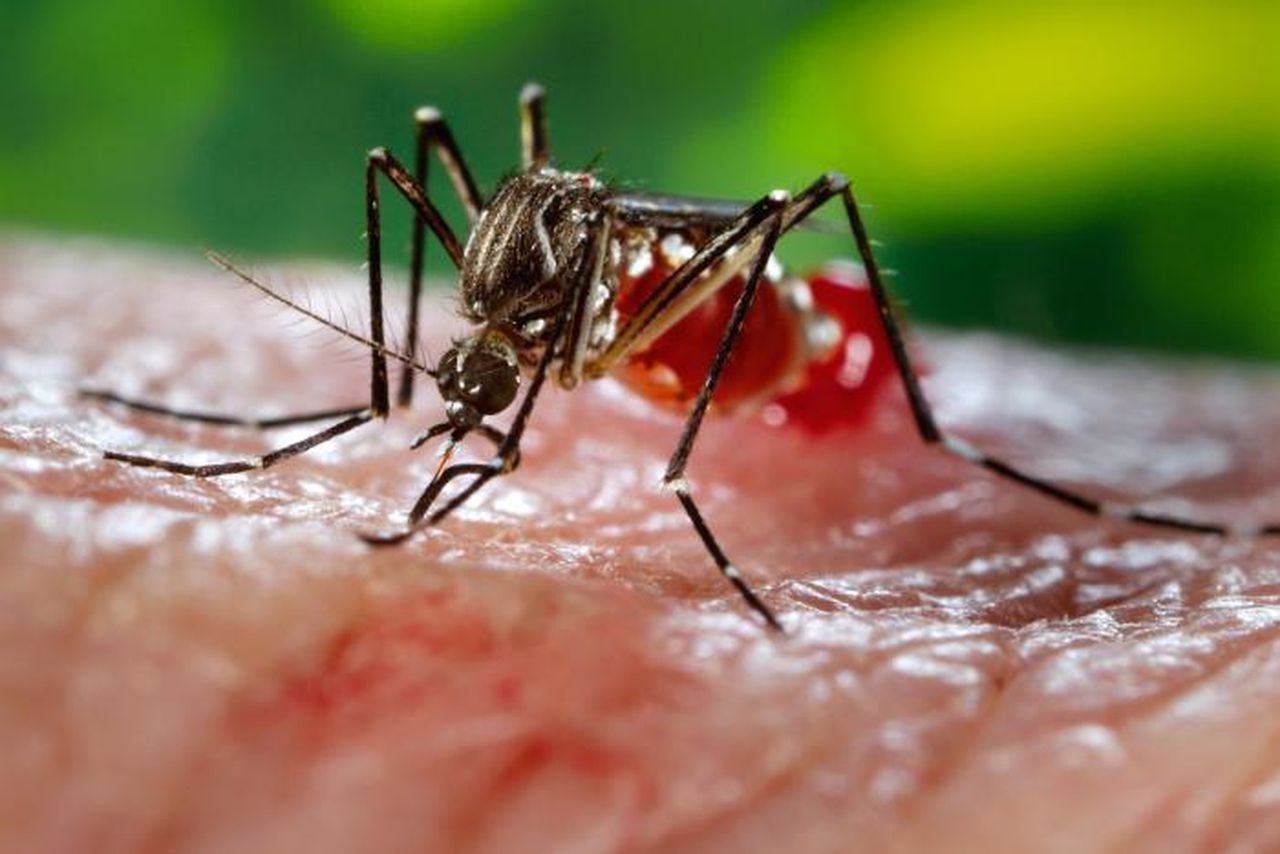
What it is: Thanks to a GMO mosquito called Friendly™ Aedes, dengue fever cases have dropped 91% in the 5,000-person CECAP/Eldorado district of Brazil since April 30, 2015, when the mosquitoes were released. The male Aedes aegypti mosquito doesn't bite or transmit disease; when it mates with wild females, their offspring inherit a fluorescent marker and a self-limiting gene that causes death before adulthood. As a result, the Aedes mosquitoes -- and their offspring -- die off without leaving an ecological footprint.

Why it's important: Genetically modified insects have already been a promising weapon in our fight against malaria. This GMO mosquito and its ilk could end dengue fever and other mosquito-borne illnesses in a matter of years. Join the Discussion

Spotted by Prithvi Raj

Nanotech Sunscreen Binds to Your Skin, But Doesn't Seep In

sticky sunscreen

What it is: Yale University dermatologist Michael Girardi has created a nanotech sunscreen that binds to proteins on your skin cells until you wipe it off with a towel. Commercial sunscreen absorbs into the skin, or washes off with water or sweat; Girardi's approach involves coating padimate 0, a UV-absorbing chemical, with a biodegradable nanoparticle polymer that prevents skin absorption.

Why it's important: Some cell culture studies have found that sunscreen chemicals may bind to internal hormone receptors. This nanoparticle sunscreen will reduce people's risk of chemical exposure while also protecting them from harmful UV rays. Join the Discussion

Spotted by Marissa Brassfield

What is Abundance Insider?

This email is a briefing of the week's most compelling, abundance-enabling tech developments, curated by Marissa Brassfield in preparation for Abundance 360. Read more about A360 below.

Want more conversations like this?

At Abundance 360, Peter's 250-person executive mastermind, we teach the metatrends, implications and unfair advantages for entrepreneurs enabled by breakthroughs like those featured above. The program is highly selective and we're almost full, but we're still looking for a few final CEOs and entrepreneurs who want to change the world. You can apply here.

Know someone who would benefit from getting Abundance Insider? Send them to this link to sign up.


If you wish to stop receiving our emails or change your subscription options, please Manage Your Subscription
PHD Ventures , 800 Corporate Pointe, Suite 350, Culver City, CA 90230