From: John Livesay <johnlivesay70@gmail.com>
Date: Thu, Jul 28, 2016 at 8:02 AM
Subject: Confidence is THE single most important attribute in being able to attract money
To: Stee <stevescott@techacq.com>
|


|
For the purpose of this blog, I'd like to suspend moral and ethical considerations for a moment – let's call this a fun thought experiment.
As we enter Olympics season, I find myself thinking about what you might call the "unlimited-class" Olympics or the "Anything Goes" Olympics -- where genetic manipulation, drugs, robotic prostheses, and AI are not only allowed but encouraged.
This blog is a quick look at what this might look like.
And, finally, after you read this blog, I'd love your feedback. Take a quick 1-question survey (click here).
In regards to the "anything goes" Olympics:
I'll report back the survey results…
Over the years, the International Olympics Committee (IOC) has stripped 67 athletes of their medals for "cheating."
The majority of these cases typically involved doping, or the use of banned athletic performance-enhancing drugs, including stimulants, steroids and human growth hormones.
While breaking the rules and cheating is certainly bad, one fact remains true – with the help of these drugs, the athletes did actually perform better than their non-enhanced counterparts, and the question remains, just how much better is possible?
Wouldn't it be interesting to watch a competition where athletes and scientists actually team up to compete in traditional and new Olympic categories as technology-enabled humans?
If so, here's what you might see.
What follows is a glimpse of what might go down when the regulatory handcuffs are taken off.
1. CRISPR/Cas9: We've seen a number of recent extraordinary advances in gene editing technology. This year, Chinese scientists announced the first human trials for a revolutionary technology called CRISPR/Cas9. As this develops, imagine we get to a place where we can design athletes for specific sports – a sprinter might want increased musculature and fast-twitch muscle fibers, more lung capacity, more height, and so on. A swimmer might want to select for an elongated torso, or more muscle endurance. But why stop there? Perhaps we could even edit in webbed fingers and gills.
To a degree, we're already seeing "genetic selection" happening. A few years ago, a Vanderbilt football coach actually offered a scholarship to the unborn child of two former athletes… And I don't doubt that in some countries, selective breeding to achieve 'top athletic' families has been the norm for decades.
2. Microparticles and Drug Delivery Mechanisms: We've also observed several developments in recent years in microparticle research and new drug delivery mechanisms. An interesting one that could one day be applied to athletics: a team at the Children's Hospital in Boston found a way to inject oxygen-filled microparticles directly into the bloodstream, quickly oxygenating the animal and keeping it alive for 15 minutes despite blocked airways. Imagine a swimmer that only needed to breathe once in a 500-meter race.
4. Steroids/Doping: An enormous number of athletes have come under fire for steroids, doping, and HGH injections (something they try to obfuscate). But what if, instead, anything goes? Of course, this is risky for hundreds of reasons, but the limits of the human physiology would rapidly be discovered.
1. Exoskeletons and Robotic Suits: Exoskeletons are robotic suits worn around a human body. Companies like Eksobionics are busy developing health, industrial and military applications. These suits can give people superhuman strength, speed and agility – why not develop them for athletes? Wouldn't you like to see Iron Man compete in a weightlifting competition, the high jump or the 100m sprint?
2. Bionic Limbs: In 2012, we saw the first bionic sprinter run 400m with prosthetic legs. What would happen if we continued to advance specialized prosthetics for specific sports – might athletes choose voluntary amputation in favor of artificial limbs that take 10 seconds off their time?
3. Brain/Computer Interface: Over the last few years, there have been incredible developments in brain-computer interface technology. The tech allows you to control and interact with tech via a direct link to your brain. This could lead to competition within entirely new sports – say, a mind-controlled drone race, or brain-controlled robot boxing.
Augmented Reality & AI: Companies like Magic Leap, Meta, and HoloLens are rapidly developing augmented reality solutions that will transform the way we live, work, play and, well, exercise. In an Olympic application, imagine a slalom skier or bike rider with AR glasses linked to an AI providing a detailed trajectory to follow, showing them when and where to speed up or slow down based on surface conditions measured with a hyperspectral camera.
Add to this the ability of an archer to point his or her arrow with such precision as an AI measures wind velocity and calculates trajectories to 5 decimal places.
1. Sensors: Some of the most interesting sensors under development are embedded and wearable biological sensors that can measure your physiology, or that of an opponent. Imagine the combination of sensors, augmented reality and AI that allows a boxer to know his opponent's weakest moments and most vulnerable body parts…
2. Sensory Substitution & Addition: Sensor technology is exploding. A number of labs have proposed ways to augment the human sensory experience by "adding senses" to the body. David Eagleman's VEST, for example, is a noninvasive, low-cost vibratory vest that allows deaf patients to perceive auditory information through small vibrations on their torso. Imagine adding senses to athletes. Soccer players could wear these sensors and intuitively "know" where the ball was, and where every other player was on the field at all times.
Could we begin to add entirely new sensors to the human experience?
Now, obviously, there are lots of challenges, both technically and ethically, with many of these scenarios.
But in a sense, I feel like we are already headed in this general direction.
Aren't athletes already training with many early versions of these tools?
While they may not be able to compete with them, they are using data and technology to optimize their performance.
From the spectator's point of view, will "non-enhanced humans" competing in sports start to bore people?
Will an unlimited Olympics happen? If today's crazy reality TV shows are any indication for the viewing audience's hunger for insanity, I'd make a long bet that it will materialize… probably not by the IOC, but by some enterprising TV mogul and promoter.
It's worth saying that there is one other positive side to all above – we'd make extraordinary technical progress driven by competition in this "ultimate sport." You can imagine then that this tech would end up helping many beyond just the athletes themselves, especially disabled individuals who have lost normal function.
This is the sort of conversation we explore at my 250-person executive mastermind group called Abundance 360.
The program is highly selective. If you'd like to be considered, apply here.
Share this with your friends, especially if they are interested in any of the areas outlined above.
P.S. Every week I send out a "Tech Blog" like this one. If you want to sign up, go to Diamandis.com and sign up for this and Abundance Insider.
P.P.S. My dear friend Dan Sullivan and I have a podcast called Exponential Wisdom. Our conversations focus on the exponential technologies creating abundance, the human-technology collaboration, and entrepreneurship. Head here to listen and subscribe: a360.com/podcast

In this week's Abundance Insider: Biohybrid beings, mine-hunting drones and an Alzheimer's vaccine.
Cheers,
Peter, Marissa, Cody, Kelley and Greg
P.S. Send any tips to our team by clicking here, and send your friends and family to this link to subscribe to Abundance Insider.

What it is: Scientists from Harvard, the University of Michigan, Stanford and the University of Illinois have created an artificial ray with a soft, 3D printed rubber body, a 3D printed gold skeleton, and muscular circuitry composed of rat heart cells that were genetically modified to contract in response to light. "Our ray outperformed existing locomotive biohybrid systems in terms of speed, distance traveled, and durability (six days), demonstrating the potential of self-propelled, phototactically activated tissue-engineered robots," the study's authors wrote.
Why it's important: This development takes us one step closer to highly specialized biohybrid beings -- imagine artificial worms that could hunt and consume cancer cells, or lifelike soft robots. (Bonus: For another biohybrid robot announced this week, check out this robot sea slug.) Join the Discussion
Spotted by Mike Spalding

What it is: The Renegade pen is a $99 3D printing pen currently raising funds on Kickstarter that uses recycled household plastic (think bags, plastic bottles and files) as well as standard plastic filaments. Daniel Edwards created Renegade to help cut down on plastic waste and decrease the barriers to 3D prototyping for mainstream users.
Why it's important: This design makes it cheaper and easier for enthusiasts and amateurs to try their hand at 3D prototyping and additive manufacturing, with the added benefit of reducing household plastic waste. Join the Discussion
Spotted by Marissa Brassfield

What it is: Entrepreneur Massoud Hassani has just revealed the latest prototype of his Mine Kafon Drone, which specializes in finding and destroying land mines with its onboard tools. The drone's camera first creates a 3D map of the area, then rescans it with a metal detector and notes GPS coordinates of any detected mines before returning back to home base. After the drone operator swaps out the metal detector for a gripper, the drone returns to each detected mine and sets explosives on it for remote detonation.
Why it's important: Hassani says that the prototype will be 20 times faster, far less expensive, and far safer for humans and animals than traditional approaches like human or canine crews. He's now working on making his system completely autonomous -- which, if successful, will help us eradicate the estimated 100 million buried landmines worldwide. Join the Discussion
Spotted by Aryadeep S. Acharya

What it is: Australian and U.S. scientists at Adelaide's Flinders University have created what may be the world's first dementia vaccine, and human trials could begin in the next two to three years. The International Business Times reports that the vaccine "targets tau proteins and abnormal beta-amyloid that cause Alzheimer's," preventing and reversing early stages of the disease. "Essentially what we have designed is a vaccine that makes the immune system produce antibodies and those antibodies act like tow trucks so they come to your driveway, they latch on to the breakdown protein or car and they pull it out of the driveway," explained Flinders University medicine professor Nikolai Petrovsky.
Why it's important: According to the World Health Organization, dementia-related illnesses and care have a total global societal cost of $600 billion per year. If effective, this vaccine could completely eliminate the 7.7 million new cases of dementia we see every year. Join the Discussion
Spotted by Marissa Brassfield

What it is: Ford Motor Company's assembly plant in Cologne, Germany is conducting a trial of human-robot teamwork. Ford's "co-bots" primarily work alongside human workers to install shock absorbers on Ford Fiesta vehicles, but they also can be programmed to perform activities like giving massages or making coffee.
Why it's important: Installing shocks in vehicles is a laborious, precise process -- one much better suited for a robot than a human. This Ford trial is one of many early examples of human-technology teamwork in the workplace, where robots not only do unpleasant jobs, but also perform activities that improve their human companions' lives. Join the Discussion
Spotted by Marissa Brassfield

What it is: Scientists from the Technical University of Delft have created the world's tiniest hard drive by manipulating single atoms. The atomic hard drive has a storage density 500 times that of current technology -- as an example, a postage-stamp-sized atomic drive could store every book on the planet.
Why it's important: The researchers described their invention as the "atomic-scale printing press." They've proven that it's possible to write, store and read data at the atomic scale -- and because this particular technique is scalable, easily automated and reliable, it's an especially exciting approach to data storage. Join the Discussion
Spotted by Stephen Polus
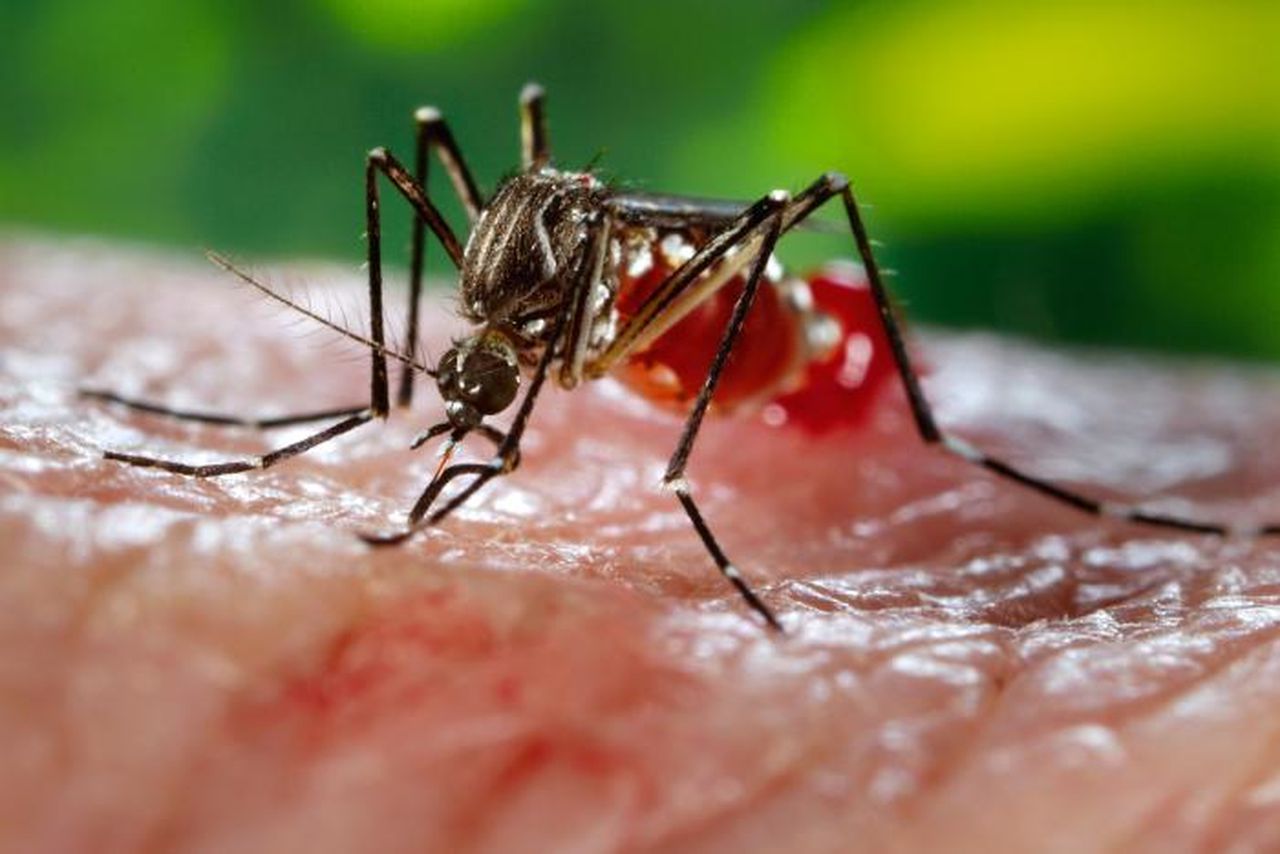
What it is: Thanks to a GMO mosquito called Friendly™ Aedes, dengue fever cases have dropped 91% in the 5,000-person CECAP/Eldorado district of Brazil since April 30, 2015, when the mosquitoes were released. The male Aedes aegypti mosquito doesn't bite or transmit disease; when it mates with wild females, their offspring inherit a fluorescent marker and a self-limiting gene that causes death before adulthood. As a result, the Aedes mosquitoes -- and their offspring -- die off without leaving an ecological footprint.
Why it's important: Genetically modified insects have already been a promising weapon in our fight against malaria. This GMO mosquito and its ilk could end dengue fever and other mosquito-borne illnesses in a matter of years. Join the Discussion
Spotted by Prithvi Raj

What it is: Yale University dermatologist Michael Girardi has created a nanotech sunscreen that binds to proteins on your skin cells until you wipe it off with a towel. Commercial sunscreen absorbs into the skin, or washes off with water or sweat; Girardi's approach involves coating padimate 0, a UV-absorbing chemical, with a biodegradable nanoparticle polymer that prevents skin absorption.
Why it's important: Some cell culture studies have found that sunscreen chemicals may bind to internal hormone receptors. This nanoparticle sunscreen will reduce people's risk of chemical exposure while also protecting them from harmful UV rays. Join the Discussion
Spotted by Marissa Brassfield
This email is a briefing of the week's most compelling, abundance-enabling tech developments, curated by Marissa Brassfield in preparation for Abundance 360. Read more about A360 below.
At Abundance 360, Peter's 250-person executive mastermind, we teach the metatrends, implications and unfair advantages for entrepreneurs enabled by breakthroughs like those featured above. The program is highly selective and we're almost full, but we're still looking for a few final CEOs and entrepreneurs who want to change the world. You can apply here.
Know someone who would benefit from getting Abundance Insider? Send them to this link to sign up.
I own a Tesla Model S and Model X with Autopilot. Best cars I've ever had.
So when the first death with Tesla's Autopilot occurred, was I pissed?
At Tesla? No, not at all.
I was pissed at the media.
This is a blog about the facts, and the Media's "negativity bias."
Here are the facts:
Prior to this first unfortunate death (my sincerest condolences to the family), Tesla's Autopilot had successfully, safely driven owners and their families 130 million miles.
Among all vehicles in the U.S., there is a fatality every 94 million miles.
Worldwide, there is a fatality approximately every 60 million miles.
As a frequent user of Autopilot, I can tell you, it makes me a safer driver, as it keeps me in the lanes when I'm groggy or distracted.
So where are the front-page media stories about how Autopilot "saves lives"?
Let's dive in…
The press has a bias towards negativity.
Because we pay 10x more attention to negative news vs. positive news, negative headlines sell newspapers and attract eyeballs for their advertisers.
As a result, stories are many times misconstrued and exaggerated.
Technology companies often suffer the worst of this misrepresentation, as technology, by nature, can be complicated, difficult to understand and frequently disrupts the establishment.
After Tesla released a letter detailing the conditions around the first fatal Autopilot crash, thousands of angry articles began to spread across the Internet – literally a feeding frenzy of articles raising concerns for the future of driverless cars, and most lambasted Tesla for their efforts in releasing Autopilot to the public before it was ready, insisting that this incident should force us to "reassess" driverless cars … here are a few high-profile examples:
Wow… really, everyone?
As Elon succinctly put in a tweet to Fortune magazine, the "BS article increased your advertising revenue. Just wasn't material to TSLA, as shown by market."
In the Tesla incident, many of the articles described Tesla's Autopilot as "deadly" or "dangerous."
The reality is, when you look at the numbers, driving with Tesla's Autopilot on is actually SAFER than driving without it, or in a car that doesn't have it.
As Elon also tweeted to the press: "If you care about auto deaths as material to stock prices, why no articles about 1M+/year deaths from other auto companies?"
The only reason the Tesla Autopilot death story is newsworthy is because it involves a new technology (AI/Robotics/Autonomous Driving) – a nice scapegoat for media to blame…
Oh yeah, and besides the fact that Autopilot makes driving safer in general, it should be mentioned that the Model S and Model X actually have the lowest probability of injury of any car ever tested by NHTSA (the National Highway Traffic Safety Administration).
Tesla's Autopilot was a software upgrade to the Model S that allows the vehicle to use its unique combination of cameras, radar, ultrasonic sensors and data to automatically steer down the highway, change lanes, and adjust speed in response to traffic.
The dashboard inside a Tesla vehicle (Source: Tesla Motors)
The Model S Autopilot uses 12 sensors on the bottom of the car — six in the front and six in the back.
It uses a front-facing camera next to the rear view mirror. It also has a radar system under the nose of the car that senses what's in front of the car.
And critically, all of the data processed by these sensors is fed back to a central hub so that all Tesla cars can learn from it, called Fleet learning.
The data is aggregated (anonymously) into maps that let the central Autopilot system see the precise paths that cars take, and don't take.
"Each driver is effectively an expert trainer in how Autopilot should work," Elon explained, and the network of Tesla vehicles is constantly learning more about where cars do and don't actually travel.
Thus, the system's capabilities "will keep improving over time, both from the standpoint of all the expert drivers ... training it," he said, "but also in terms of the software functionality" -- which will add new features.
This is so important I need to restate it: With every single mile driven, the cars get safer and safer.
As Tesla reports, "As more real-world miles accumulate and the software logic accounts for increasingly rare events, the probability of injury will keep decreasing. Autopilot is getting better all the time, but it is not perfect and still requires the driver to remain alert. Nonetheless, when used in conjunction with driver oversight, the data is unequivocal that Autopilot reduces driver workload and results in a statistically significant improvement in safety when compared to purely manual driving."
The reason this pisses me off, besides the aforementioned, is that technology actually makes our lives better on so many different dimensions, but we fear what we don't understand.
Genetically Modified Organisms (GMO) technology, for example, has allowed us to feed tens of millions of people and have never caused a death, yet an uneducated public reacts negatively to what they don't understand.
In the near future, as we see AI, robotics, synthetic genomics and other exponential tech entering further and deeper into our lives, it will be responsible for raising everyone's standards of living, making our lives easier, saving lives…
But as we see the first deaths occur, much of society's gut reaction is to reject the technology, rule it out, or dismiss it as 'not working' or dangerous.
While some make efforts to shut it down, rarely do regulatory bodies make an effort to measure the HARM done by shutting down the tech.
Sure, we could shut down efforts for autonomous cars, and in so doing continue a 33,000 annual death rate per year… but that, IMHO, would be immoral and irresponsible. Or we can embrace the technology and drive the death rate towards zero.
Technology is hard, but it's worth it.
It's likely in 20 years that we'll look back on those days when we gave a 17-year-old kid with less than 20 hours of experience control of a 5,000-lb. vehicle speeding along at 65 MPH as a somewhat insane practice.
I'll take an ever improving machine learning algorithm over kid with a learners' permit any day.
This is the sort of conversation we explore at my 250-person executive mastermind group called Abundance 360.
The program is highly selective. If you'd like to be considered, apply here. Share this with your friends, especially if they are interested in any of the areas outlined above.
P.S. Every week I send out a "Tech Blog" like this one. If you want to sign up, go to Diamandis.com and sign up for this and Abundance Insider.
P.P.S. My dear friend Dan Sullivan and I have a podcast called Exponential Wisdom. Our conversations focus on the exponential technologies creating abundance, the human-technology collaboration, and entrepreneurship. Head here to listen and subscribe: a360.com/podcast

